Avia Logo

Compare Products


Jump to:
Categories
Solutions
Description
Compatibility Level
Clients
Use cases
EHR integrations
Client types
Awards
Differentiators
Keywords
Media
Company details
Jump to:
Categories
Solutions
Description
Compatibility Level
Clients
Use cases
EHR integrations
Client types
Awards
Differentiators
Keywords
Media
Company details
ConnectHealth
ConnectHealth

0 review

Categories

Solutions

Description

Product Description:

We’re offering EHR integration (Epic, Cerner, Athena, and others) with zero setup fee, fully deployed within your own AWS cloud environment. This helps you go live faster, validate your product with real clinical data, and demonstrate traction to customers and investors.

Why it matters for startups:

Go to market faster with an AI-first, zero-code platform connecting EHRs, wearables, labs, and payors, in minutes, not months

Launch pilots or production the same day, accelerating customer validation and revenue cycles

Reduce costs of integration by 60–70%, preserving runway while scaling integrations

Stay compliant from day one with AWS-native deployment, ensuring HIPAA-ready PHI isolation and zero external data sharing

Build, validate, and scale your product, without worrying about EHR integration.

About Mindbowser:

Mindbowser is a HealthTech Consulting company which blends deep clinical expertise with top-tier engineering to deliver tailored, AI-driven, interoperable, and compliant digital health solutions. With 200+ HIPAA- and FHIR-trained professionals and over 250 successful projects, we help healthcare organizations, from startups to hospitals, accelerate digital transformation, improve patient outcomes, and streamline operations.

Our 50+ pre-built solutions integrate with major EHRs, wearable devices, and IoT platforms, enabling real-time insights and seamless care coordination. From AI-powered clinical decision support and automated administrative workflows to population health management and payer-focused solutions, we help organizations innovate faster while ensuring security, compliance, and scalability.

Product Description:
  • Iguana is a powerful integration engine designed to facilitate seamless communication between diverse systems and applications. It specializes in transforming, routing, and managing data across various platforms, making it particularly valuable in healthcare, finance, and other industries that require robust data exchange.

  • At its core, Iguana allows users to connect disparate systems, regardless of their underlying technologies or protocols. This flexibility enables organizations to streamline their workflows and enhance data interoperability. The engine supports a wide range of data formats, including HL7, XML, JSON, and CSV, making it suitable for various use cases.

  • Iguana features an intuitive user interface that simplifies the process of mapping data fields and creating integration workflows. Users can easily define how data should be transformed and routed between systems, ensuring that information is accurately exchanged and processed. The engine also includes powerful monitoring and logging capabilities, allowing users to track data flows and troubleshoot issues in real time.

  • Moreover, Iguana is built with scalability in mind, enabling organizations to adapt to changing needs as they grow. Its support for cloud and on-premises deployment options provides additional flexibility for businesses of all sizes.

  • Overall, Iguana is an essential tool for organizations looking to optimize their data integration processes, enhance operational efficiency, and improve decision-making through timely and accurate information sharing.
About iNTERFACEWARE Inc.:
  • iNTERFACEWARE is a leading provider of integration solutions, used extensively used within healthcare, but equally powerful in finance, operations, and beyond.

  • Its flagship product, Iguana, enables seamless data exchange between disparate systems, facilitating interoperability and streamlining workflows. 

  • With support for various data formats and an intuitive user interface, iNTERFACEWARE empowers organizations to transform, route, and manage data effectively. 

  • The platform's robust monitoring capabilities ensure reliable performance and real-time troubleshooting, making it a vital tool for enhancing operational efficiency and improving data-driven decision-making.

Compatibility level

Select which hospital or health system you work at and see a personalized compatibility level.

Clients

Select which hospital or health system you work at and see the client list

Use Cases

Description:

Automating Clinical and Operational Workflows with ConnectHealth

Health systems today face growing operational pressure due to fragmented data flows, manual documentation, delayed lab results, inefficient referral management, and missed reimbursement opportunities. These challenges not only slow down care delivery but also create administrative burden for providers and staff.

ConnectHealth addresses these issues through a compliance-first, low-code integration platform that connects clinical systems using FHIR and HL7 standards, enabling automated workflows across the care continuum.

With ConnectHealth, health systems can streamline multiple high-impact workflows directly within their existing EHR environment.

Automated RPM Billing

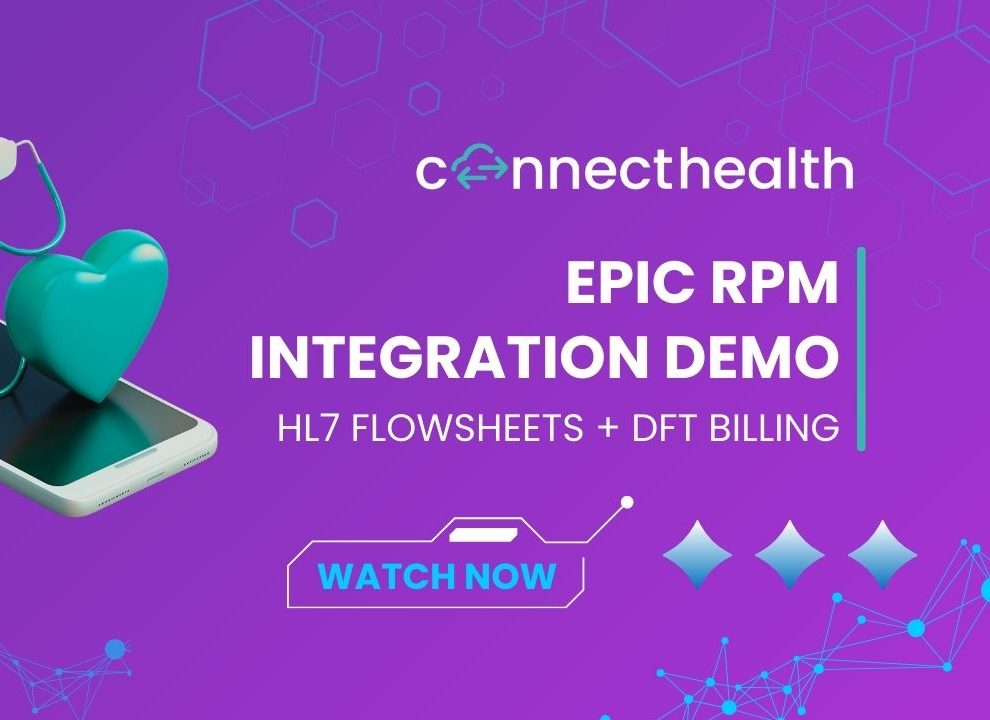
Remote Patient Monitoring programs often lose revenue due to missed CPT codes or incomplete documentation. ConnectHealth automates RPM billing by triggering CPT codes such as 99454 and 99458 when monitoring milestones are met. Device data flows through the integration layer and automatically initiates billing workflows in the EHR, reducing revenue leakage and administrative effort.

Workflow:

Device API → HL7 OBX → CPT Trigger → Epic Billing

AI Agent Appointment Booking

Scheduling appointments remains a major operational burden for clinical staff. ConnectHealth enables AI voice agents and assistants to book appointments directly within the EHR. Using FHIR slot discovery and HL7 SIU confirmation messages, appointments are scheduled and confirmed automatically within the provider calendar.

Workflow:

Voice Bot → FHIR Slot → SIU Message → EHR Calendar

Real-Time Lab Integration

Delayed lab results often impact clinical decision-making. ConnectHealth integrates Laboratory Information Systems (LIS) with the EHR so that results flow directly into the patient's record as structured and actionable data. This allows providers to access real-time diagnostic insights without manual follow-up.

Workflow:

LIS → HL7 ORU → FHIR Report → EHR Results

AI Scribe to EHR Write-Back

Clinical documentation consumes significant provider time. ConnectHealth supports AI scribe workflows that transcribe patient encounters and automatically structure them into SOAP notes, which are then written back into the EHR as flowsheets or documents.

Workflow:

Audio → AI Transcription → SOAP Note → Epic

Closed-Loop Referral Management

Referral coordination across providers is often fragmented and difficult to track. ConnectHealth enables closed-loop referral workflows by generating C-CDA documents, sharing them with provider directories, and tracking referral status in real time.

Workflow:

Referral → C-CDA Generation → Provider Directory → Status Notification

Proactive Care Gap Alerts

Health systems need to identify high-risk patients earlier to improve outcomes and manage population health. ConnectHealth enables bulk data extraction using FHIR Bulk Export, which feeds AI-driven risk models to detect care gaps and trigger alerts for care managers.

Workflow:

FHIR Bulk Export → Risk Model → AI Alert → Care Manager

Impact for Health Systems

By integrating clinical systems and automating workflows, ConnectHealth helps health systems:

Reduce manual administrative work

Improve clinical documentation efficiency

Accelerate lab result availability

Strengthen referral coordination

Increase RPM program reimbursement

Enable proactive population health management

Through its low-code architecture and standards-based integrations, ConnectHealth enables healthcare organizations to deploy these workflows quickly while maintaining compliance and interoperability with major EHR systems.

Pediatric use cases:

None provided

Users:

1.Healthcare IT and integration teams managing EHR interoperability

2.CTOs, CIOs, and CMIOs evaluating integration platforms for hospitals and health systems

3.Digital health product teams integrating with EHRs for care workflows, patient access, or reporting

4.Engineering leaders who want faster integration delivery with less long-term maintenance

5.Organizations standardizing interoperability across multiple partners and systems

Description:

Industries/Markets:

  • Hospitals & Physician Practices
  • Radiology
  • Laboratory
  • Public Health Agencies
  • Billing: Payer & Insurance Providers
  • Academic (Education & Research)

Scenarios and Workflows:

  • Patient Demographics
  • Patient Care Histories
  • Orders and results (lab)
  • Public health reporting
  • Billing
Pediatric use cases:

None provided

Users:

Providers:

  • Clinics
  • Hospitals
  • Medical Labs
  • Medical Practices
  • Ambulatory Centers
  • Academic Medical Centers
  • Diagnostics and Imaging Centers

Vendors:

  • Health Insurers
  • Medical Software Providers
  • Medical Device Manufacturers

EHR Integrations

Integrations:

Acute care EMR, Ambulatory EMR, Ancillary EMR, Patient portal, ADT, Credentialing, Other

EMR Integration & Relevant Hardware:

Use case dependent

EMRs Supported:

Epic, Cerner, Meditech, Allscripts, NextGen, athena, GE, eClinicalWorks, McKesson, Other, Allscripts/Eclipsys, Athenahealth, Azalea Health/Prognosis, CPSI, Evident, Healthland, MEDHOST, MedWorx, QuadraMed, Self-developed, Would prefer not to disclose, Point Click Care

Hardware Compatibility:

Desktop, Mobile / Tablet (web optimized), Mobile / Tablet (native app), Other

Integrations:

Acute care EMR, Ambulatory EMR, Ancillary EMR, ERP system, Patient portal, Pop health platform, Home health, Behavioral health, Community based organizations, ADT, Access +/or revenue cycle, Credentialing, Website / public online sources, Other

EMR Integration & Relevant Hardware:

Use case dependent

EMRs Supported:

Epic, Cerner, Meditech, Allscripts, NextGen, athena, GE, eClinicalWorks, McKesson, Other, Allscripts/Eclipsys, Athenahealth, Azalea Health/Prognosis, CPSI, Evident, Healthland, MEDHOST, MedWorx, QuadraMed, Self-developed, Point Click Care

Hardware Compatibility:

Desktop

Client Types

Awards

edit-media
edit-media
No awards image

Differentiators

Differentiators vs EHR Functionality:

Provides a dedicated interoperability and integration layer that connects multiple healthcare systems, including EHRs, labs, devices, and payer systems, rather than functioning as a traditional patient record system.

Automates complex healthcare workflows such as eligibility verification, referral management, and scheduling through configurable workflow orchestration.

Supports modern healthcare standards including FHIR, HL7, and SMART on FHIR, enabling seamless data exchange across diverse healthcare platforms.

Uses AI-powered workflow generation and automation to reduce manual configuration and accelerate deployment.

Deploys securely within a customer’s cloud environment to maintain full data ownership and HIPAA-compliant security controls.

Differentiators vs Competitors:

AI-first healthcare integration platform that automates EHR integrations and workflow orchestration using intelligent agents and prebuilt templates.

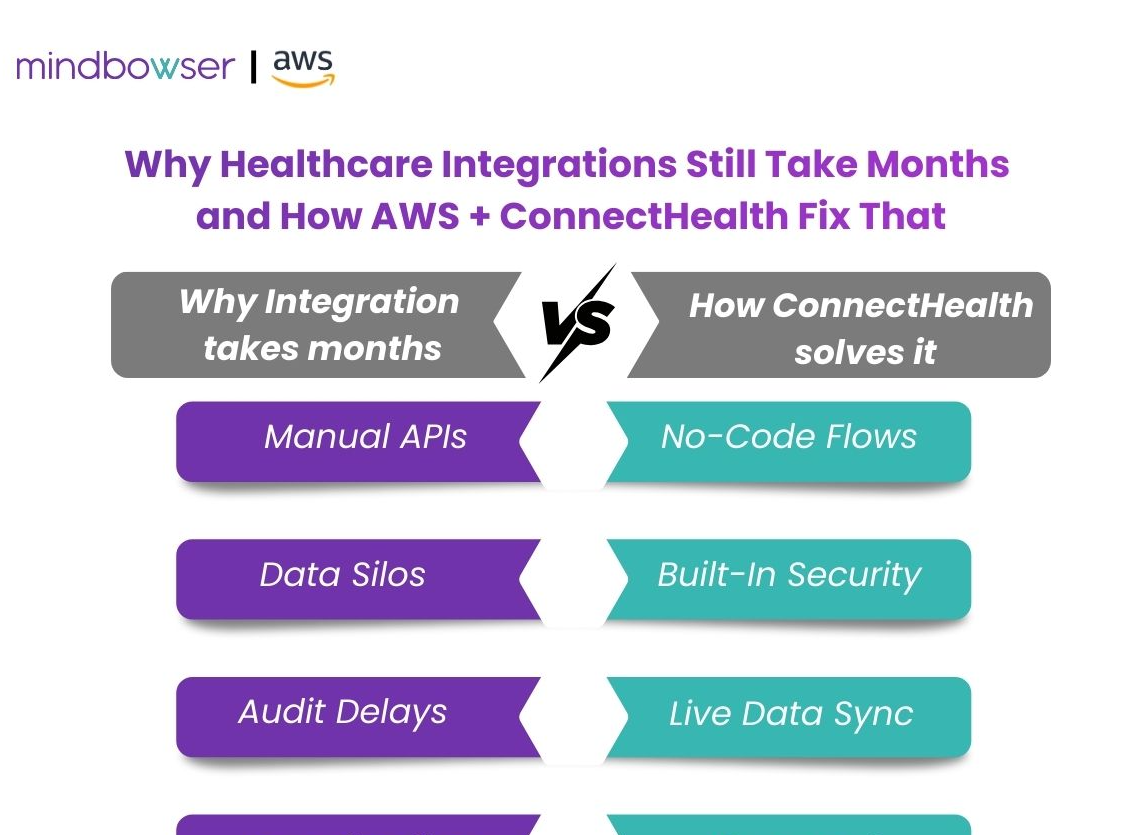
Significantly reduces integration timelines from months to days by eliminating custom HL7/FHIR development and enabling reusable workflows.

Build-once, deploy-everywhere architecture that allows integrations to be reused across multiple EHR systems such as Epic, Cerner, and Athena.

Runs inside the customer’s cloud environment, ensuring complete data sovereignty and avoiding vendor-hosted PHI risks.

Combines interoperability with operational workflow automation, enabling healthcare organizations to improve efficiency, reduce manual workload, and accelerate innovation.

Differentiators vs EHR Functionality:

Iguana's integration engine offers full flexibility in connecting various EHR systems, including Epic, Cerner, Allscripts, and more, without being limited to predefined templates or channels. 

Iguana does not limit the number of channels or connections, allowing for more scalable and seamless integration between multiple EHRs or systems.

This is ideal for Healthcare Providers or Vendors who need custom integration, giving them full control over how data is integrated between systems.

Differentiators vs Competitors:

Licensing and Cost: Iguana provides more flexible licensing options that aren't tied to the number of channels or connections, allowing businesses to scale without the added cost of per-instance or per-connection fees. This sets it apart from competitors that often charge based on the number of connections, interfaces, or instances, which can become expensive as integration needs grow.

Hosting Options: Iguana offers both self-hosted and cloud-hosted solutions, providing flexibility for organizations that need to align with their internal IT infrastructure, whether on-premise or in the cloud. This contrasts with other solutions that may only provide cloud-based hosting, which could be limiting for companies that require more control over their hosting environments.

Customizability: With Iguana, users can take advantage of a toolkit approach to build custom integrations themselves, offering full control over the integration process. This is ideal for organizations that prefer to manage their own interfaces and avoid relying on external services to build or maintain integrations. Other platforms may require paying for each interface or have more rigid, pre-built solutions that limit flexibility.

Support for Various Data Formats and Protocols: Iguana is versatile in supporting a wide range of data formats (such as HL7, FHIR, XML, JSON, etc.) and transport protocols (including LLP, HTTP/S, FTP, and more), making it suitable for diverse integration needs. Many competing solutions may specialize in a narrower set of data formats or protocols, limiting their application in more complex integration environments.

Key differentiator: Iguana’s flexibility, scalability, and cost-efficiency stand out, particularly for organizations looking to manage their own integrations and support a broad array of systems, data formats, and transport protocols.

Keywords

Images

1 of 4

edit-media
Integration from Months to Days

1 of 4

edit-media
Iguana - Dashboard

Videos

1 of 2

edit-media
ConnectHealth - EPIC RPM Integation

1 of 2

Iguana X - Connect Any System

Downloads

media thumbnail
EHR Integration Case Study
media thumbnail
Iguana for Providers.pdf

Alternatives

Company Details

ADD PRODUCT

Add similar products

Xealth

24 clients

team illustration
Share your product comparison with your collegues.

Need help narrowing down products?

Add more criteria to see your compatibility level for every vendor. It only takes a few minutes, just create a free account to get started.
back to top