






Avia Logo

Products /

Clincian Burnout

Clincian Burnout

Clincian Burnout

6 verified clients

Claimed

Overview


Clincian Burnout Feature Highlights

AI Burnout Risk Detection

Identifies overtime trends and workload imbalance before burnout impacts care teams.


Workload & Shift Optimization

Balances schedules to reduce fatigue, improve coverage, and support clinician well-being.


Administrative Burden Reduction

Automates staffing workflows and approvals so clinicians spend more time on patient care.

Select which hospital or health system you work at and see a personalized compatibility level.

Avia Summary

o
Clincian Burnout is a solution provided by Ringo VMS. It belongs to multiple categories of digital health solutions including Clinician Burnout, Human Capital Management , Revenue Cycle Management (RCM), and Dynamic Staffing & Scheduling.
o
It has 6 verified clients.
o
Some other resource(s) that may be helpful in learning about Clincian Burnout include: Burned out physicians: AI is here to help and Empowering Nurses: Reducing Clinical Burden with Aiva’s AI Solutions
DESCRIPTION

Ringo is a healthcare-specific workforce optimization platform designed to help hospitals and health systems reduce clinician burnout, improve workforce stability, and control labor costs. Founded in 2001, Ringo began as a hospital billing solution focused on eliminating administrative complexity. In 2020, the company launched its NextGen Vendor Management System (VMS)—purpose-built for healthcare—to address growing challenges around contract labor management, vendor coordination, credentialing, and workforce compliance. Today, Ringo’s AI-powered workforce platform expands that foundation by helping health systems proactively address clinician burnout through intelligent staffing, workload balancing, and real-time workforce visibility.

As an AI-driven healthcare workforce management platform, Ringo empowers healthcare organizations with the tools needed to improve clinician well-being while maintaining operational performance. The platform centralizes dynamic staffing & scheduling, predictive workforce forecasting, credential validation, labor analytics, and rate governance—providing clinical leaders, HR teams, finance departments, and operations executives with a single source of truth for workforce data. By applying artificial intelligence to forecast staffing needs and automate workforce workflows, Ringo helps reduce excessive overtime, stabilize shift coverage, and support sustainable staffing models that improve clinician retention and patient care outcomes.

Ringo supports healthcare facilities nationwide and manages more than $275 million in annual contingent labor spend while delivering measurable operational improvements. In the KLAS 2025 First Look Report, Ringo earned outstanding ratings—including a 94.2 overall satisfaction score with 100% of customers saying they would buy again—highlighting the platform’s reliability, usability, and strong partnership model.

Why Ringo for Clinician Burnout Reduction

Purpose-built for healthcare: Designed specifically for hospitals, health systems, and complex clinical staffing environments.

AI-powered staffing optimization: Predicts staffing gaps and balances workloads to prevent clinician fatigue.

Dynamic staffing & scheduling: Improves shift coverage and reduces overtime that contributes to burnout.

Human Capital Management alignment: Provides unified visibility across internal staff, float pools, and contingent labor.

RCM and operational performance alignment: Ensures stable staffing to support patient throughput and revenue cycle efficiency.

Real-time workforce analytics: Gives leaders actionable insights into staffing trends, labor costs, and workforce sustainability.

Operational and financial impact: Clients experience improved retention, reduced premium labor reliance, and stronger workforce stability.

End-user–focused design: Intuitive workflows built for nurse leaders, staffing coordinators, HR teams, and executive leadership.

Ringo’s mission has always been centered on clarity, transparency, and smarter workforce management. By combining AI-driven workforce intelligence with dynamic staffing and vendor-neutral workforce governance, Ringo helps healthcare organizations reduce clinician burnout, stabilize staffing operations, and create a more sustainable healthcare workforce.

Workforce Optimization, Simplified.

Read more
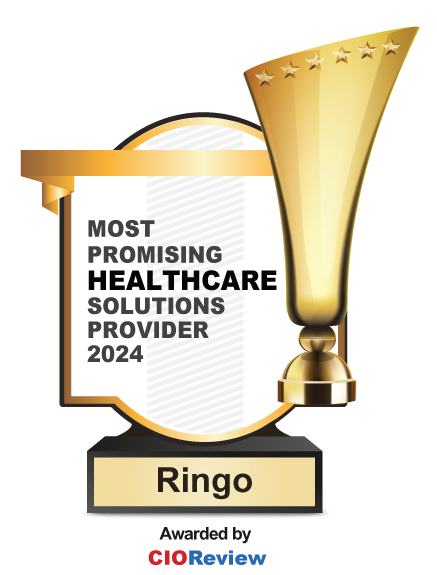
AWARDS
edit-media
edit-media
edit-media
Product capabilities

Intelligent Automation

Ringo reduces clinician burnout through intelligent automation powered by AI, machine learning, and robotic process automation (RPA). The platform automates scheduling workflows, credential validation, and workforce analytics to reduce administrative burden and balance clinician workloads. By identifying staffing gaps, overtime risks, and workload imbalances in real time, Ringo enables healthcare leaders to optimize staffing, improve clinician well-being, and maintain operational efficiency.

AVIA GUIDE
What is intelligent automation?
Utilizes AI and machine learning to automate routine tasks Employs robotic process automation (RPA) for repetitive, rule-based processes Reduces manual data entry and associated errors Example: An RCM solution that automatically codes encounters based on clinical documentation and updates claims in real-time.
EHR integration

ERP system, Credentialing, Website / public online sources, Other
None provided
None provided
Desktop, Mobile / Tablet (web optimized), Mobile / Tablet (native app)
Use cases and differentiators

Ringo helps healthcare organizations address clinician burnout by using AI-driven workforce insights, dynamic staffing & scheduling, and intelligent automation to balance workloads and reduce administrative burden. By providing real-time visibility into staffing demand, overtime trends, and workforce utilization, Ringo enables clinical and operational leaders to proactively prevent staffing gaps and fatigue across care teams.

Burnout Risk Identification:

Use AI-driven analytics to identify overtime trends, workload imbalances, and staffing gaps before burnout occurs.

Workload & Shift Balancing:

Distribute schedules intelligently to prevent excessive overtime and clinician fatigue.

Administrative Burden Reduction:

Automate credentialing, scheduling coordination, and approvals to free clinicians from manual tasks.

Internal Resource Optimization:

Prioritize internal staff and float pools before agency utilization to improve workforce stability.

Retention & Workforce Sustainability:

Support healthier work environments that improve clinician engagement and reduce turnover.

Operational & Financial Stability:

Maintain consistent clinical coverage to protect patient throughput, care quality, and revenue cycle performance.

Chief Nursing Officers (CNOs):

Monitor workforce capacity, reduce clinician burnout, and ensure balanced staffing across departments and shifts.

Nurse Managers & Clinical Leaders:

Identify workload imbalances, adjust schedules proactively, and support clinician well-being while maintaining patient care quality.

Human Resources & Workforce Leaders:

Improve retention by aligning staffing strategies, workload distribution, and workforce sustainability initiatives.

Chief Operating Officers (COOs):

Gain enterprise visibility into staffing utilization, burnout risks, and operational efficiency across facilities.

Chief Financial Officers (CFOs):

Control overtime and premium labor costs while improving workforce productivity and operational performance.

Staffing Coordinators:

Balance schedules, fill coverage gaps quickly, and reduce last-minute staffing disruptions.

Revenue Cycle Management (RCM) Leaders:

Ensure consistent clinical coverage that supports patient throughput, documentation accuracy, and billing continuity.

Compliance & Risk Officers:

Monitor credential compliance and workforce policies to maintain regulatory readiness while protecting clinician workloads.

Workforce Well-Being Focus: Built to identify and reduce clinician burnout vs EHR systems focused primarily on clinical documentation.

AI Burnout Risk Detection: Uses predictive analytics to identify overtime and workload imbalance vs EHR tools that only display static schedules.

Dynamic Staffing Optimization: Balances staffing levels and shift distribution vs basic department scheduling modules.

Administrative Burden Reduction: Automates scheduling coordination, credential tracking, and approvals vs manual workflows within EHR systems.

Enterprise Workforce Visibility: Provides real-time insights into staffing trends and clinician workload vs siloed operational reporting.

Ringo is purpose-built for Healthcare workforce optimization vs generic workforce tools designed for multiple industries

Ringo uses AI-driven workforce analytics to identify burnout risks and workload imbalance vs competitors that only track schedules

Ringo connects dynamic staffing, scheduling, and workforce analytics in one platform vs competitors requiring multiple disconnected tools

Ringo aligns workforce operations with Human Capital Management (HCM) and Revenue Cycle Management (RCM) performance vs systems focused only on staffing logistics

Ringo integrates internal staff, float pools, and contingent labor into one workforce strategy vs competitors managing only employed staff or agency labor separately

Ringo provides vendor-neutral workforce governance and transparency vs platforms tied to staffing agencies with potential conflicts of interest

Ringo can implement quickly with $0 startup costs vs competitors requiring lengthy implementations and expensive setup fees

At Ringo WE DO MORE!

Company information

Media


Images

edit-media
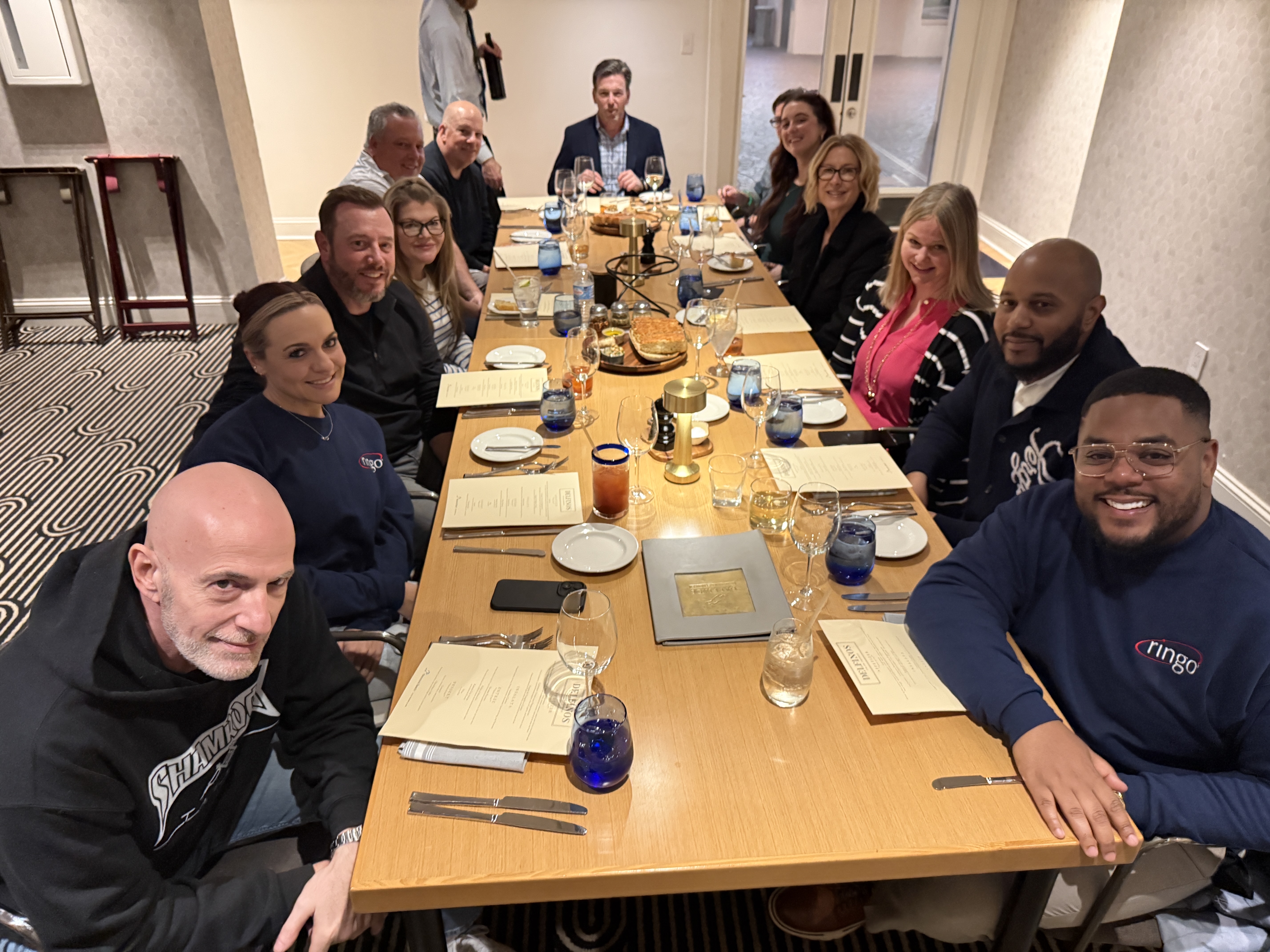
Ringo Team Dinner
edit-media
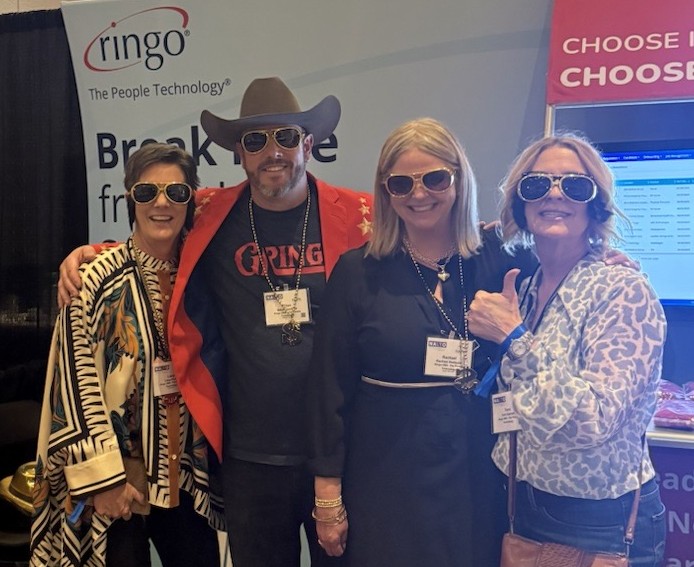
NALTO Networking Event
edit-media
Ringo Happy Hour
edit-media
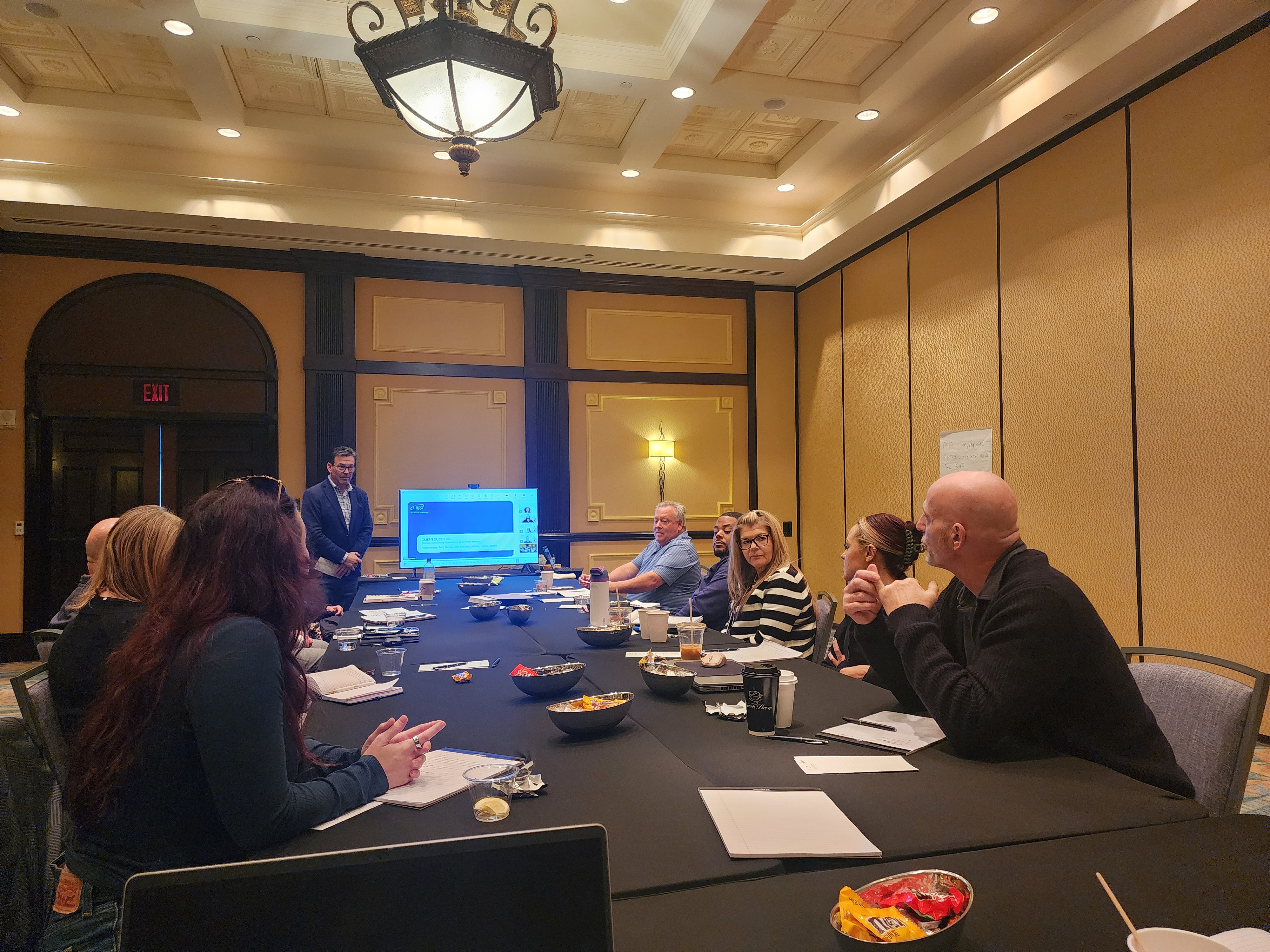
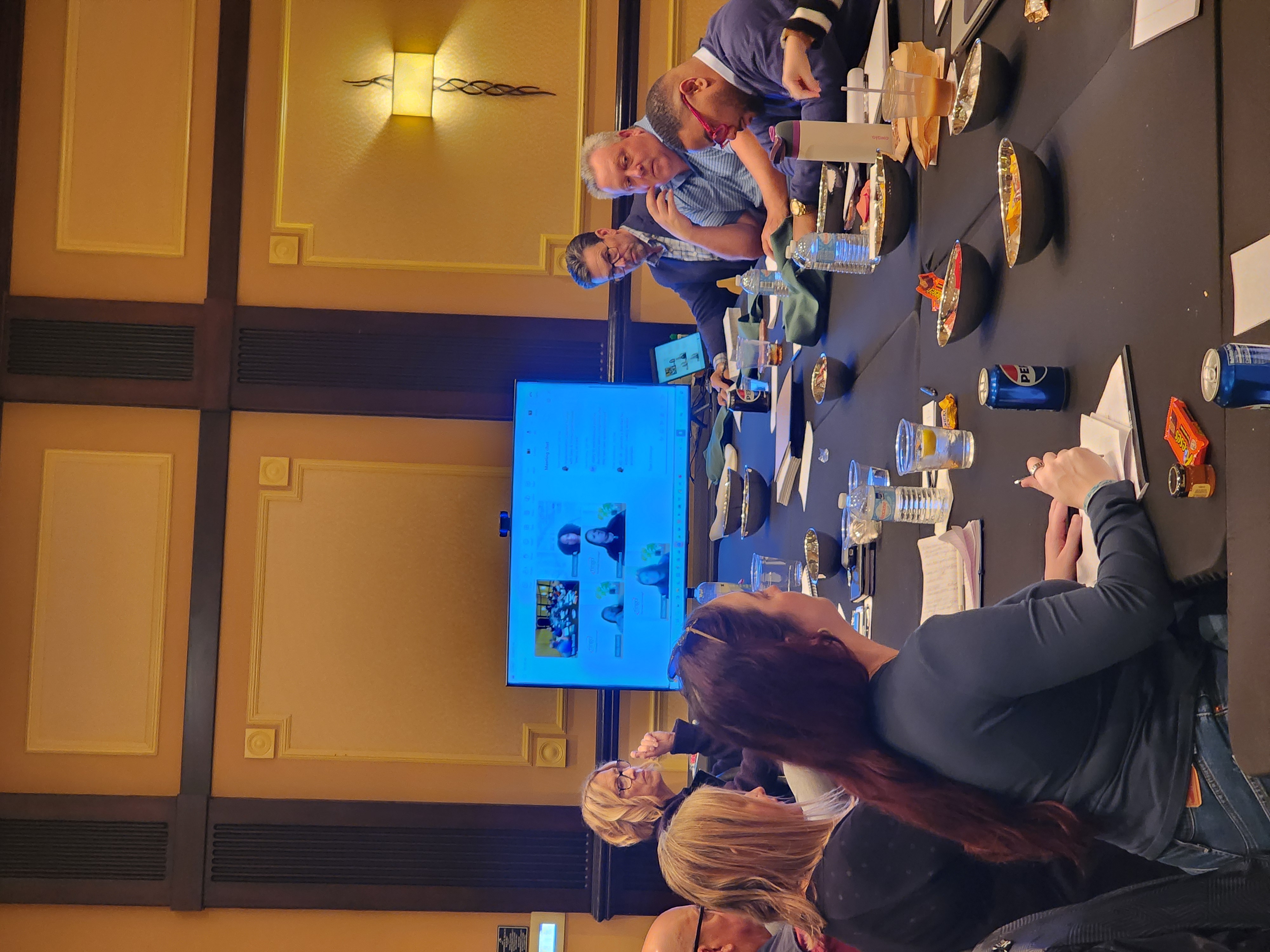
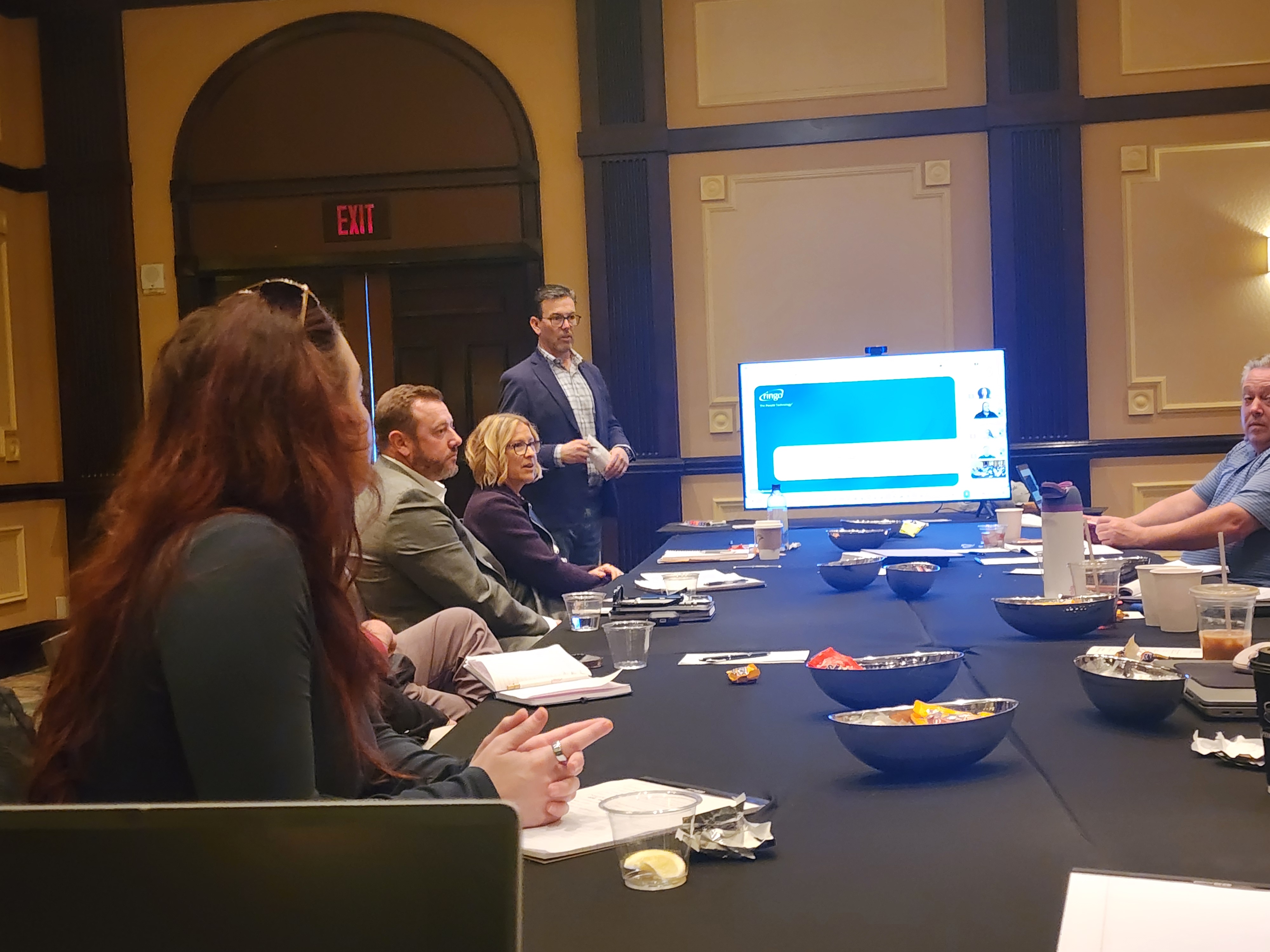
Ringo Team Product Review
edit-media
Company Meeting
edit-media
Team Meeting
edit-media
Ringo at NALTO
Videos

Client Admin Video
Ringo Demo Video
Ringo Demo Video
Downloads

media thumbnail
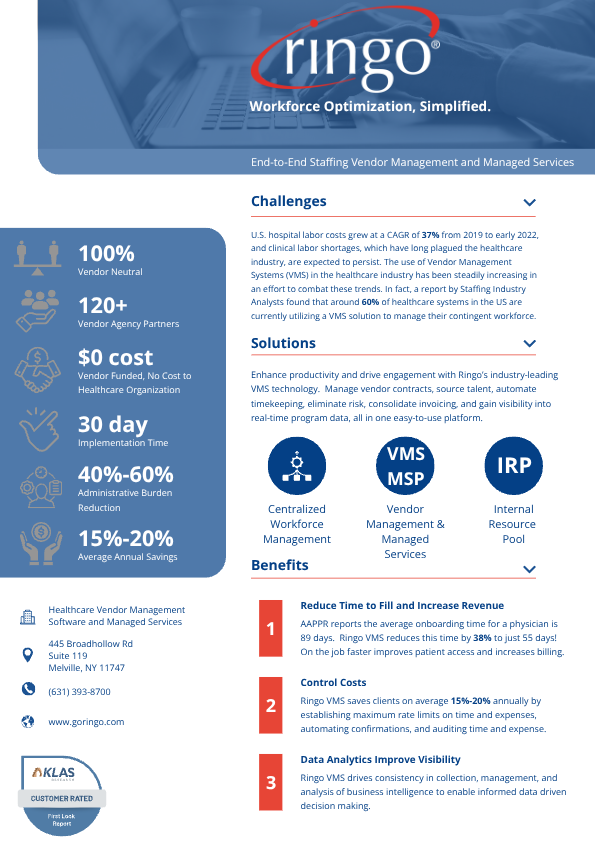
Stats One Pager
media thumbnail
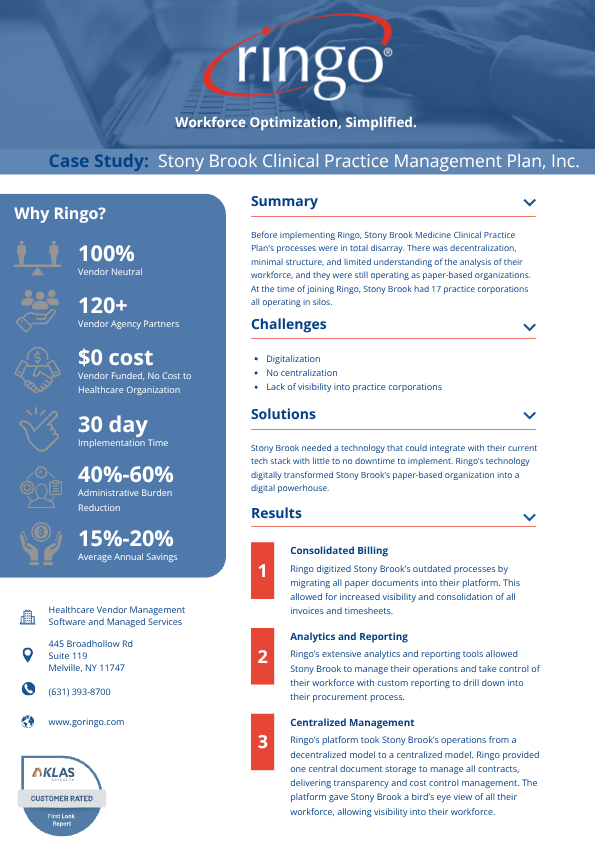
Stony Brook
media thumbnail
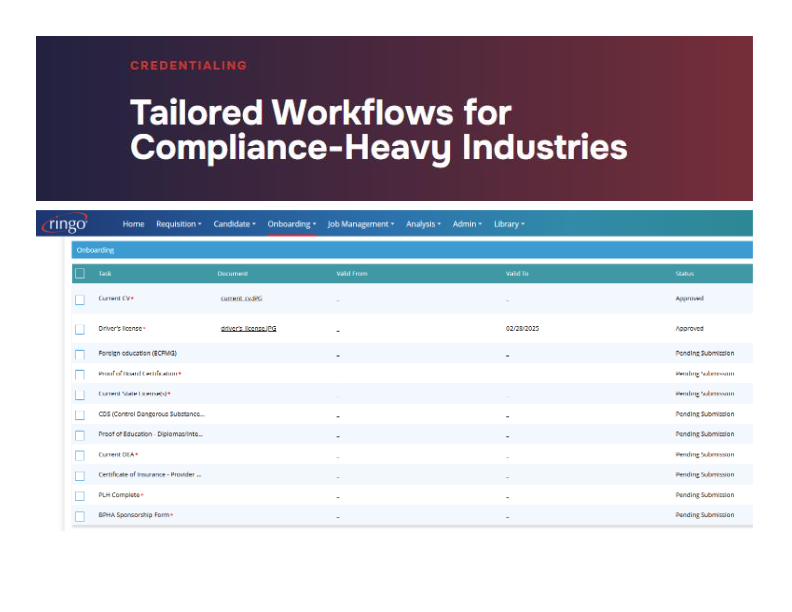
Tailored Workflows for Compliance-Heavy Industries
media thumbnail
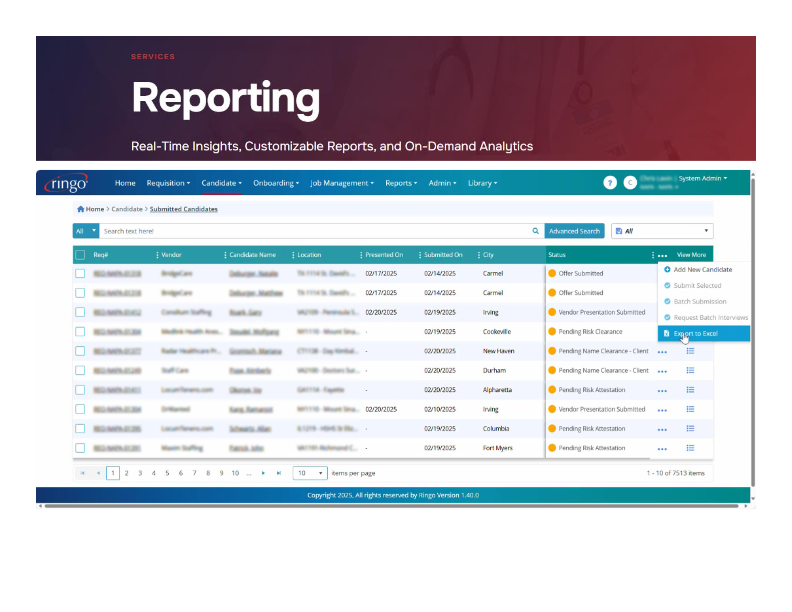
Real-Time Data, Powerful Capabilities
media thumbnail
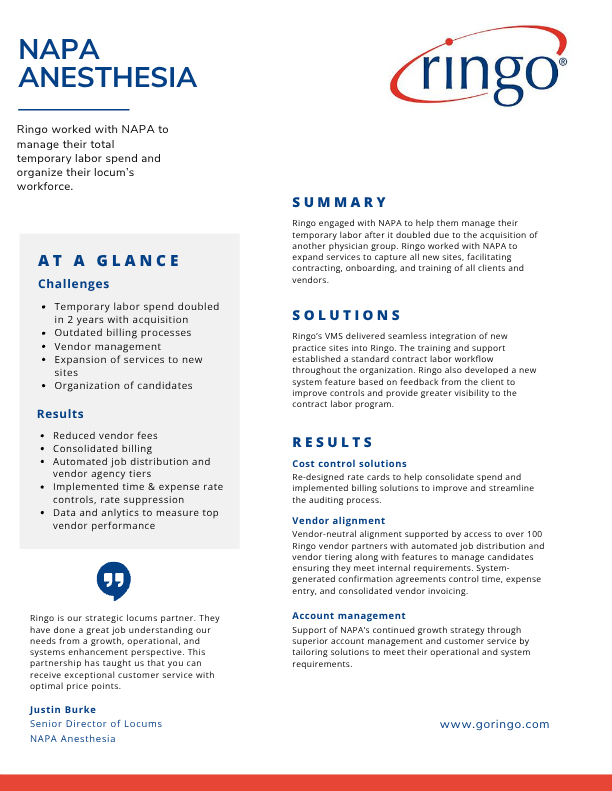
NAPA Case Study

Reviews


Filter reviews


Overall Score

0 review


Sort by:
Most Recent
Sort by:
Most Recent
Oldest
Most Helpful

Filter reviews


Reviewer’s Rating
5
4
3
2
1

Reviewer’s Role
  • End user
  • Project manager
  • IT / Technical support
  • Executive sponsor
  • Internal consultant
  • Other

Reviewer’s Org Size
  • XL ($5B+ NPR)
  • L ($3-5B NPR)
  • M ($1-3B NPR)
  • S ($0.2-1B NPR)
  • XS (< $0.2B NPR)

Reviewer’s Org EMR compatibility

Reviewer’s Org Type
  • AMC
  • Pediatric Facilities
  • ACO
  • Rural Presence

Reviewer’s Org Safety Net
  • Used by Safety Net organizations

Looking for reviews on Clincian Burnout?

Submit your work email and we'll notify you when new reviews have been added.

Clients


Filter clients


Type
  • Partner

  • Vendor

  • Health System

  • Other

Explore Related Resources
back to top