Avia Logo

Compare Products


Jump to:
Categories
Solutions
Description
Compatibility Level
Clients
Product Capabilities
Use cases
EHR integrations
Client types
Differentiators
Keywords
Media
Company details
Jump to:
Categories
Solutions
Description
Compatibility Level
Clients
Product Capabilities
Use cases
EHR integrations
Client types
Differentiators
Keywords
Media
Company details
Mobile Health
Mobile Health

0 review

Categories

Solutions

Description

Product Description:

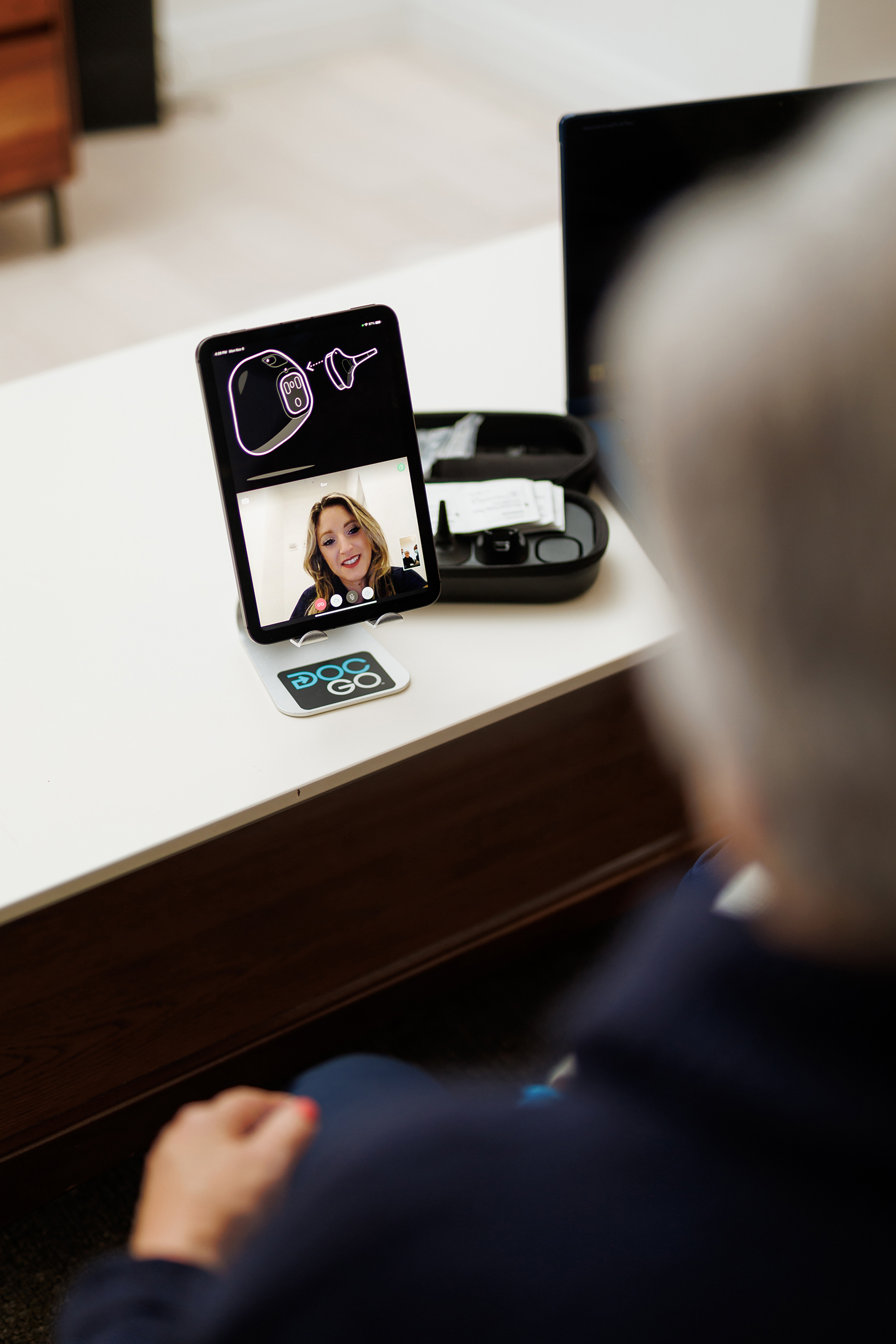
Our Mobile Health services provide care directly to patients when and where they need it, how they need it. Care can be administered directly by our licensed clinicians in a patient’s living room, by telehealth through web and mobile apps, or by mass-scale in communities. Our services are built to anticipate health needs and provide proactive solutions to improve patient health. Because resting comfortably at home is always our desired outcome.

DocGo’s innovative approach to home visits sends our cost-effective mobile health clinicians into the home. Once there, they provide patients with access to an Advanced Practice Provider through a synchronous video link and connected devices. Remote medical diagnostics technology is the key that lets our telehealth-based providers conduct thorough exams and treat a wide range of conditions. Accurate patient data and hands-on support by mobile clinicians in the home allows our practitioners to confidently deliver high-quality patient care, develop treatment plans, and prescribe medications. Mobile health care delivered in the home is foundational to the success of our programs, which include ED diversion, TCM, care gap closure, remote patient monitoring and chronic disease management.

DocGo reduces emergency room visits and hospitalizations with Mobile Urgent Care and targeted patient outreach. We work with healthcare partners to identify patient populations driving avoidable ED visits, then address the underlying challenges and deliver quality care. Our results speak for themselves: we have saved our healthcare partners more than $265 million in 2024 through ED avoidance.

Our Transitional Care Management programs help patients remain at home post-discharge with home visits and telehealth follow-up programs, reducing 30-day readmission rates by between 35-50% in identified patient populations for our partners. Our approach is proven to improve both partner quality metrics and patient outcomes.

Get on-demand care directely to your patients when, where, and how they need it with DocGo's Mobile Health Services. 

About DocGo:

DocGo is shaping the future of healthcare by reimagining the way healthcare is delivered. Our proprietary technology and skilled clinicians deliver population health programs for governments, value-based arrangements for payers, medical transportation for hospitals, and mobile healthcare solutions that bring care to patients where it’s needed, when it’s needed.

Product Description:

Fabric’s Virtual Care Platform is a telemedicine platform that empowers providers and prioritizes patients. Our white-label virtual care solution increases access for patients and reduces 99% of provider work time. By leveraging asynchronous medical protocols, Fabric enables providers to deliver care in under two minutes, creating a better experience for both patients and providers. The Virtual Care Platform also enables providers to seamlessly transition into synchronous modes of care, including chat, video, and phone, while triaging and routing patients to in-person care when necessary.

Why Asynchronous Virtual Care?

In-person care and synchronous video-based telemedicine are valuable, but these modalities have efficiency limitations and health equity challenges. A concerted strategy shift that leverages asynchronous telemedicine is key. We’ve done the research and proven that asynchronous telemedicine can solve the biggest challenges facing healthcare:

  • Staffing shortages
  • Provider burnout
  • Delayed and avoided care
  • Consumerism
  • Health equity
  • Access to care
  • Patient leakage

90% Adherence to Clinical Guidelines: Fabric leverages patient responses and clinical guidelines to provide efficient, accurate clinical decision support. We have a Clinical Quality Advisory Council made up of 15 healthcare leaders to establish clinical quality best practices for virtual care.

89-Second Provider Work Time: On average, our adaptive patient interviews gather the information a provider needs to make a diagnosis and treatment recommendation in just 89 seconds, compared with 18 minutes for an in-person visit. This gives providers more time to focus their time on patients with more complex needs, while still offering high-quality care for common conditions.

Patients Love the Experience: Patients receive the dual benefits of convenience and efficiency. They can access the system via any web-enabled device and complete their online adaptive interview in a fraction of the time taken by an in-person visit. On average, patients using asynchronous care wait 6:29 minutes for a diagnosis, spend $25 per visit, and rate us at 64 for NPS. 

Drive Patient Acquisition and Revenue: 40% of Fabric’s virtual visits are net new patients for our customers. Those patients are 276% more likely to convert to a health system patient, and the average first-year revenue for each new patient is $2,900. With the lifetime value of a patient expected to exceed a million dollars, a solid digital strategy is a significant competitive advantage – meanwhile, a lack of one poses a threat to organizations.

In-Depth Reporting and Analytics: Our clients capture significant structured data through the online adaptive interview. Using our HIPAA-compliant Fabric Analytics reporting tool, health systems can follow trends related to conditions treated, visit timing, guideline adherence, and triaged patients.


About Fabric Health:

Fabric is a health tech company that powers healthcare providers to move faster, work smarter, and deliver better care through its care enablement system. The system offers three solutions: In-Person Care Suite, Virtual Care Suite, and Engagement Suite. 

Leveraging conversational AI and intelligent adaptive interviews, Fabric unifies virtual and in-person care across intake, triage, routing, and treatment while automating workflows for staff. Built by a team of physicians and clinical informaticists, Fabric protocols uphold excellence in care quality while offering omnichannel access for patients. The results enable clinicians to work 2-10 times faster (dependent on setting), decrease call center volume by 15%, and increase utilization of unfilled visit blocks. 

Some of Fabric’s customers include Luminis Health, OSF HealthCare, MUSC Health, and Intermountain. Fabric is backed by Thrive Capital, GV (Google Ventures), Salesforce Ventures, Vast Ventures, BoxGroup, and Atento Capital.

Compatibility level

Select which hospital or health system you work at and see a personalized compatibility level.

Clients

Select which hospital or health system you work at and see the client list

Product Capabilities

The Fabric Virtual Care Suite is EHR agnostic and supports four virtual care modalities, including asynchronous intelligent adaptive interviews, chat, phone, and video visits. Fabric also offers integrated Spanish translation.

Patients choose between asynchronous intelligent adaptive interviews, chat, phone, and video visits. Depending on the patient's selection and reason for visit, they may share photos with the provider to aid in diagnosis. On average, patients who choose asynchronous care receive a diagnosis and treatment plan in less than seven minutes.

The Fabric care enablement system's asynchronous intelligent adaptive interviews enable providers to diagnose patients in 89 seconds. Zipnosis also offers seamless step-ups to video and in-person care as needed.

Fabric reduces 99% of administrative work using our clinical intelligence and artificial intelligence, enabling providers to treat low acuity patients in 89 seconds—10 times faster than in-person visits.

Fabric supports up-front pricing and sends prescriptions to the patients' preferred pharmacy.

Fabric's product support team is available for patients from 6AM-10PM CST Monday-Friday, and 8AM-8PM CST Saturday, Sunday and Holidays. Fabric's technical support team for admins and providers is available from 8AM-5PM CST Monday-Friday and is oncall after-hours for urgent issues. The Fabric Help Center is accessed via SSO from Zipnosis Admin and Provider portals.

Fabric supports unloading and offloading patient demand based on each organization’s unique goals. Fabric enables organizations to choose how they utilize the nationwide network’s 24/7/365 resources: • Outsource low-acuity visits • Leverage internal capacity across your organization to meet internal and external patient demand • Divert to network providers during high demand or after-hours

Fabric collects comprehensive data on provider utilization, average visit times, most commonly treated conditions, escalations, visit volume, and more.

Use Cases

Description:

None provided

Pediatric use cases:

None provided

Users:

None provided

Description:

Fabric has devoted more than 15 years towards building the industry-leading enterprise virtual care platform. While most health systems begin their virtual care strategy with urgent care, Fabric has expanded its clinical use cases to meet primary care, behavioral health, occupational medicine, post-operative and other virtual care needs.

Pediatric use cases:

Fabric offers over 50 protocols for pediatric care, and Fabric's Clinical Quality Advisory Council has a specific subcommittee for reviewing, maintaining, and improving our pediatric protocol suite. 

Users:

The platform was designed with the patient and provider user and their experience in mind focused on ease of use, value, utility, safety, and reliability. Early usability research was applied to optimize the use experience which has led to the high patient NPS of 64.

EHR Integrations

Integrations:

Acute care EMR, Ambulatory EMR, Ancillary EMR, Patient portal, Pop health platform, Home health, Community based organizations, Credentialing, Website / public online sources, Other

EMR Integration & Relevant Hardware:

Recommended, but not required

EMRs Supported:

Epic, Cerner, athena, Other

Hardware Compatibility:

Desktop, Mobile / Tablet (web optimized), Mobile / Tablet (native app), Other

Integrations:

Acute care EMR, Ambulatory EMR, Patient portal, Website / public online sources, Other

EMR Integration & Relevant Hardware:

Recommended, but not required

EMRs Supported:

Epic, Cerner, Meditech, Allscripts, NextGen, athena, eClinicalWorks

Hardware Compatibility:

Desktop, Mobile / Tablet (web optimized)

Client Types

Differentiators

Differentiators vs EHR Functionality:

None provided

Differentiators vs Competitors:

None provided

Differentiators vs EHR Functionality:

Fabric's Virtual Care Suite is powered by Fabric's Clinical Intelligence Engine, Loom. Loom is a clinical expert system and conversational ai that captures patient data across channels and automates workflows for clinical and administrative staff. Using automated clinical symptom gathering, Loom generates clinical SOAP notes, treatment plans, visit summaries and more. When applied across 2,000+ unique diagnoses, Loom automates 99% of administrative burden for staff and makes clinicians 2-10x faster at providing care. Additionally, Loom offers clinical decision support to providers to uphold the highest levels of care quality. 

Additionally, Fabric's team of expert clinicians builds and maintains our clinical expert system and content in coordination with our Clinical Quality Advisory Council, a team of 14 practicing clinical executives from around the country. Council members perform reviews of Fabric's evidence-based clinical protocols. Additionally, the council supports ongoing quality assurance efforts and helps establish clinical quality best practices for virtual care. The council also guides in-depth studies around the safety, effectiveness, and value of virtual care.

Differentiators vs Competitors:

We are asynchronous care experts.

Fabric offers an industry-leading enterprise virtual care solution with four modes of care. Our asynchronous, phone, video, and chat options offer seamless integration between modes within the context of a visit meaning that as communication needs change, your patients and providers never lose connection.

With over 15 years of proven experience in asynchronous care, we are the market leader for online adaptive interviews. While newer entrants offer asynchronous modes of care, our experience and constant improvement to our clinical guidelines offer a higher standard of care at over 90% adherence.

We’ve also instituted a Clinical Quality Advisory Council, a collection of 14 healthcare leaders committed to providing clinical and strategic guidance to the virtual care industry. Council members perform reviews of Fabric's evidence-based clinical protocols. Additionally, the council supports ongoing quality assurance efforts and helps establish clinical quality best practices for virtual care. The council also guides in-depth studies around the safety, effectiveness, and value of virtual care.

We're expanding health equity.
We are on a mission to address healthcare’s biggest challenges. One of those is expanding access for rural, low-income, and non-English-speaking populations. Virtual care is the path to expanding access, but serving these groups requires modalities that work within market limitations. For example, we know that rural populations often struggle with access in terms of physical distance from care facilities as well as limited bandwidth and cell signal. The internet divide significantly affects rural and low-income populations, making them more likely to have metered internet plans or limited broadband access.

Our async-first technology excels in these circumstances because it requires lower bandwidth and can help address patient concerns before connecting them with a provider via another modality. This allows patients to avoid an unnecessarily expensive and time-consuming drive to a clinic or a data-consuming video visit.


Language is another significant barrier to health equity. Many health systems lack the staff to support non-English-speaking patients, causing visits to run longer and increasing the risk of delayed and avoided care. We are excited to announce that the Fabric asynchronous platform is now available in Spanish to support the largest non-English-speaking population in the U.S. Our dynamic content management system:

  • Translates all patient-facing text into Spanish
  • Translates patient inputs back into English for providers
  • Presents care plans and patient education to the patient in Spanish

Keywords

Images

1 of 11

edit-media
MH 2

1 of 4

edit-media
Customized Entry Points.png

Videos

1 of 1

MH Video

No videos provided

Downloads

No content provided

media thumbnail
Fabric Integrations - Optimize Your EMR.pdf

Alternatives

Company Details

Founded in 2009

team illustration
Share your product comparison with your collegues.

Need help narrowing down products?

Add more criteria to see your compatibility level for every vendor. It only takes a few minutes, just create a free account to get started.
back to top