Avia Logo

Compare Products


Jump to:
Categories
Solutions
Description
Compatibility Level
Clients
Product Capabilities
Use cases
EHR integrations
Client types
Awards
Differentiators
Health equity
Keywords
Media
Company details
Jump to:
Categories
Solutions
Description
Compatibility Level
Clients
Product Capabilities
Use cases
EHR integrations
Client types
Awards
Differentiators
Health equity
Keywords
Media
Company details
Tele-Critical Care
Tele-Critical Care

0 review

Categories

Solutions

Description

Product Description:

Critical care units often face significant bottlenecks, with patients experiencing long waits for limited ICU beds. Studies indicate that nearly half of the patients admitted to ICUs could be adequately managed in less intensive settings. These delays not only increase morbidity and mortality rates but also escalate healthcare costs. Equum Medical’s Tele-Critical Care Services provide an innovative solution to these challenges by offering comprehensive, remote critical care coverage.

Our services include both episodic and round-the-clock ICU coverage through telehealth consultations and management. By leveraging advanced telehealth technology, we help standardize workflows and protocols, guiding house staff and hospitalists through critical procedures. This approach ensures consistency in care delivery, improving patient outcomes and operational efficiency.

Equum Medical’s Tele-Critical Care Services extend beyond the ICU, enhancing critical care support in the emergency department (ED) as well. This ensures that high-acuity patients receive the appropriate level of care from the moment they arrive, significantly reducing adverse events and shortening lengths of stay. By integrating our services, hospitals can optimize patient flow, minimize ICU overcrowding, and enhance overall patient safety and satisfaction.

Our tele-critical care model allows healthcare providers to manage high-acuity patients more effectively, ensuring timely interventions and reducing the strain on ICU resources. By providing expert critical care support remotely, Equum Medical helps hospitals deliver high-quality care to patients, regardless of their location. This innovative approach not only addresses current critical care challenges but also sets the stage for a more resilient and efficient healthcare system.

About Equum Medical:

Equum Medical is a leader in the telehealth industry, dedicated to transforming healthcare delivery with innovative, technology-enabled solutions. Founded by experienced physicians and healthcare professionals, Equum Medical is a trusted partner for hospitals and healthcare systems aiming to enhance patient care, improve operational efficiency, and address workforce challenges. Our mission is to provide high-quality, accessible healthcare services, particularly in rural and underserved communities, through a comprehensive suite of telehealth solutions.

Equum Medical offers a wide range of telehealth services designed to meet the diverse needs of healthcare providers and patients. Our services include, Virtual Nursing, Tele-ICU, Virtual Sitter, Telemetry, Multi-Specialty Telehealth and High-Acuity Care.

Our Unique Proposition centers on our physician-founded and operated approach, ensuring services are designed with a deep understanding of clinical workflows and patient care needs. With over 200 years of combined telehealth experience among our leadership team, we offer unparalleled expertise to our clients.

Equum Medical is committed to addressing healthcare workforce shortages and enhancing care delivery through strategic telehealth solutions, making high-quality healthcare accessible to all.

Product Description:

Nesa: The Virtual Care Operating System That Disappears Into Epic Workflow

NESA provides the only Epic Toolbox-listed virtual care infrastructure that elegantly integrates into existing clinical workflows. Unlike traditional point solutions that add vendor complexity, NESA's ONE platform replaces 3-7 separate contracts with a single, unified system that scales across unlimited use cases—from virtual nursing and telesitting to tele-stroke, NICU, ED triage, and specialist consults.

One Platform. One Integration. Unlimited Workflows.

Built on NVIDIA edge-based AI, NESA Vision One combines computer vision (17+ body joints, object detection, room context) and natural language processing in a single device that sees patient movement, listens to care conversations, and acts instantly—all while maintaining complete data sovereignty within your hospital network. Every camera operates as its own computer, enabling distributed processing that optimizes power consumption while running multiple applications simultaneously.

Clinical-Grade Infrastructure

  • 4K high-resolution optics with 360° awareness and 25× optical PTZ
  • Real-time AI processing with zero cloud latency—all data stays on-premise
  • Direct Epic flowsheet write-back, ADT feeds, and native ECAL/CAL integration
  • HIPAA-compliant, NDAA-compliant hardware with built-in redundancy
  • Whisper AI for crystal-clear audio capture even in noisy clinical environments

Measurable Impact

Trusted by health systems including Duke, Baylor Scott & White, and UT Health San Antonio:

  • Zero-Latency Performance: Real-time fall detection and clinical event monitoring that works even if the hospital network goes down.
  • Automated Documentation: AI that captures clinical events and pre-populates notes directly into Epic Hyperspace.
  • 4K Dual Verification: A 30% reduction in medication errors by allowing a remote nurse to verify high-risk meds via high-definition video.
  • Efficiency Gains: 73.9% of discharge orders are now completed by 10am, compared to a 46.2% baseline.
  • Clinical Safety: A 37.5% reduction in falls with injury and an 80% reduction in severe hospital-acquired pressure injuries (HAPI).
  • High Adoption: 100% nurse technology adoption rates, with patients reuqesting rooms fitted with Nesa ONE. 

Designed by Clinicians, for Clinicians

Nesa is recognized by Joint Commission surveyors as "the standard that should exist in patient care across all hospitals" and partners with Magnet-designated organizations. The platform is certified to NHS clinical risk management standards (DCB 0129) for international deployment.

Scale your best clinicians across your entire system—without extending vendor contracts, security reviews, or integration backlogs.

About Nesa:

Industry leading, Epic Toolbox 2025 and 2026 for Inpatient Virtual Care platform combining edge AI, computer vision, and native workflow integration.

Compatibility level

Select which hospital or health system you work at and see a personalized compatibility level.

Clients

Select which hospital or health system you work at and see the client list

Product Capabilities

Fixed room displays with intuitive patient/family-facing UI showing care team info, patient education, and visit schedules in easy-to-read format

Fully configurable unit-specific displays with health system branding, customizable layouts for different care settings (ICU, Med-Surg, Behavioral Health), and role-based information presentation

Epic Toolbox 2025 and 2026, Epic-native integration providing real-time EHR updates, automated alerts for patient conditions, and seamless device connectivity through existing hospital infrastructure

AI-powered patient monitoring with continuous video analytics detecting falls, mobility changes, and safety events; predictive algorithms enabling proactive intervention

Enterprise-grade platform with 99.9% uptime, HIPAA-compliant security, redundant systems, and precise data transmission with clinical-grade accuracy for virtual care delivery

Platform is clinician-focused for virtual nursing/telesitting; patient environmental controls (lights, temperature) are being released in 2026

Native Epic integration enabling automated clinical workflow alignment, vitals synchronization, and coordination across hospital systems without custom interfaces. See Epic Toolbox Blueprint for 2025 and 2026 to understand integration depth.

Edge computing architecture with NVIDIA chips enables distributed processing where each camera operates as its own computer, running multiple applications simultaneously while optimizing power consumption and reducing centralized data center load

Bi-directional audio/video communication between patients and remote care teams, with one-touch calling through in-room displays and mobile devices

Virtual care teams access real-time Epic patient context, care team assignments, and clinical summaries at point of care; facilitates collaboration between bedside and remote clinicians through integrated communication

Use Cases

Description:

Critical care units often face significant challenges in managing patient flow and ensuring timely access to specialized care. Limited ICU bed availability and a shortage of intensivists contribute to higher morbidity, mortality, and healthcare costs. Equum Medical's Tele-Critical Care services, including eICU and Tele-ICU, provide innovative solutions to these challenges by leveraging telehealth technology to extend critical care expertise to patients regardless of their physical location.

eICU and Tele-ICU Services:

Equum Medical's eICU and Tele-ICU services offer continuous remote monitoring and management of ICU patients by board-certified intensivists and critical care nurses. These services enable real-time patient monitoring, expert consultations, and collaborative care, enhancing the capacity of ICU units and improving patient outcomes.

Use Case 1: Managing ICU Bed Shortages

A community hospital with a limited number of ICU beds often struggles to accommodate high-acuity patients, leading to long wait times and increased patient transfers. By implementing Equum Medical's Tele-ICU services, the hospital can provide remote intensivist coverage for patients awaiting ICU beds. This service ensures that patients receive critical care interventions promptly, reducing the risk of adverse events and optimizing the use of available resources. Remote intensivists can guide on-site staff through complex procedures, manage patient care plans, and make timely decisions to improve patient outcomes.

Use Case 2: Enhancing Care in Rural Hospitals

A rural hospital with no full-time intensivist faces challenges in providing high-quality critical care. Equum Medical's eICU services enable the hospital to offer expert critical care support remotely. Intensivists monitor patients' vital signs, review medical records, and collaborate with the on-site team to manage critical cases effectively. This service enhances the hospital's ability to provide comprehensive care, reducing the need for patient transfers to larger facilities and ensuring that patients receive timely, specialized care close to home.

Use Case 3: Supporting Surge Capacity During Pandemics

During the COVID-19 pandemic, hospitals experienced unprecedented surges in critically ill patients, overwhelming ICU capacities. Equum Medical's Tele-ICU services provided essential support by extending the reach of intensivists to multiple hospitals simultaneously. This service allowed hospitals to manage higher patient volumes, ensuring that all patients received appropriate critical care without compromising quality. Tele-ICU services facilitated efficient resource allocation, reducing clinician burnout and improving overall patient outcomes during the crisis.

Use Case 4: Integrating Multidisciplinary Care Teams

A tertiary care hospital seeks to enhance its ICU services by integrating a multidisciplinary approach to patient care. Equum Medical's eICU platform enables seamless collaboration between remote intensivists, on-site specialists, and nursing staff. This integrated approach ensures that patients benefit from a comprehensive care plan that addresses all aspects of their condition. The eICU platform supports real-time data sharing and communication, facilitating informed decision-making and improving patient care coordination.

Conclusion:

Pediatric use cases:

None provided

Users:

Physician

Intensivisit

Critical Care

Telehealth

Hospitals

Health Systems

Description:

Nesa is is the ONE platform for any use case from admission to transition and provides Epic-native virtual care infrastructure with AI-powered clinical intelligence, enabling health systems to scale clinical capacity across unlimited workflows through a single platform and integration.

Core Capabilities:

Virtual Nursing

Deploy hub-and-spoke models where virtual clinicians monitor 12-16 patients with AI-powered alerts, provide admission/discharge support, medication verification, and documentation assistance—all within Epic workflow.

AI-Powered Safety Monitoring

Continuous computer vision analytics detect fall risks, monitor patient positioning, and track behavioral changes, writing data directly to Epic flowsheets with <15-second alert-to-intervention times.

Specialist Consults

Connect neurologists, neonatologists, and intensivists to multiple facilities via Epic Monitor for stroke assessment, NICU resuscitation, ICU backup, and tele-specialty services.

ED Virtual Triage

Conduct intake via Epic ASAP, expedite orders, reduce LWBS rates, streamline bed assignment, and reduce boarding times through virtual physician assessment.

Hospitalist Coverage

Enable after-hours and multi-site coverage where hospitalists admit from multiple EDs simultaneously, provide backup coverage, and eliminate admission delays.

Admission, Discharge & Transfer (ADT)

Streamline ADT workflows virtually through Epic integration, reducing patient wait times and improving care coordination across transitions.

Ambient Clinical Documentation

Capture care conversations and automatically document in Epic through ambient voice intelligence, reducing documentation burden without leaving workflow.

Surgical/OR Support

Virtual nurses document procedures in Epic OpTime while surgical teams stay focused on patient care, capturing supplies and interventions in real-time.

Care Coordination

Conduct home assessments, coordinate post-acute transitions, and enable family participation via MyChart Bedside TV integration.

Behavioral Health Monitoring

Remotely monitor patient behavior with AI-powered detection to ensure real-time patient and staff safety, particularly in psychiatric and detox settings.

Pediatric use cases:

Pediatric & Family Support

  • eNICU and ePICU: Enhance NICU and PICU care quality with specialist access and family engagement, PICU or NICU to ED support, delivery room support
  • Mother-Baby Monitoring: Support postpartum care, lactation support, and mothers undergoing detoxification
  • Newborn Observation: Manage respiratory decompensations with continuous AI-powered monitoring
  • Patient & Family Education: Reduce bedside time pressure while improving care experience
  • Virtual Family Check-ins: Provide family-centered care through MyChart Bedside
Users:

Virtual nurses, bedside nurses, hospitalists, specialists (neurologists, neonatologists, intensivists), ED physicians, OR teams, care coordinators, administrators, patients, and family members

EHR Integrations

Integrations:

Acute care EMR

EMR Integration & Relevant Hardware:

Not applicable

EMRs Supported:

Epic, Cerner, Meditech, Allscripts, NextGen, athena, GE, eClinicalWorks, McKesson, Other, Allscripts/Eclipsys, Athenahealth, Azalea Health/Prognosis, CPSI, Evident, Healthland, MEDHOST, MedWorx, QuadraMed, Self-developed, Would prefer not to disclose, Point Click Care

Hardware Compatibility:

Desktop, Mobile / Tablet (web optimized), Mobile / Tablet (native app), Other

Integrations:

Acute care EMR, Ambulatory EMR, ADT, Other

EMR Integration & Relevant Hardware:

Required

EMRs Supported:

Epic

Hardware Compatibility:

Desktop, Mobile / Tablet (web optimized), Mobile / Tablet (native app), Other

Client Types

Awards

edit-media
edit-media

Differentiators

Differentiators vs EHR Functionality:

Equum Medical Intensivists leverage a systems existing EMR Infrastructure

Differentiators vs Competitors:

1. Physician-Led and Operated

Equum Medical is founded and operated by physicians, which ensures that their telehealth solutions are designed with a deep understanding of clinical workflows and patient care needs. This physician-led approach enhances the relevance and efficacy of their services.

2. Comprehensive Suite of Services

Equum Medical offers a broad portfolio of telehealth services that cover the entire acute care continuum, including:

  • Tele-ICU: Provides critical care support with board-certified intensivists and critical care nurses, ensuring real-time patient monitoring and expert consultations.
  • Virtual Nursing: Offers round-the-clock nursing support, assisting with patient assessments, medication administration, and care coordination.
  • Virtual Sitter: Enhances patient safety by providing continuous remote monitoring to prevent falls and other safety concerns.
  • Telemetry: Enables remote cardiac monitoring for early detection and management of cardiac events.
  • Multi-Specialty Telehealth: Provides access to specialists in various fields, such as cardiology, nephrology, neurology, and more.

3. Focus on Rural and Underserved Communities

Equum Medical has a strong commitment to improving healthcare access in rural and underserved areas. Their telehealth services are tailored to address the unique challenges faced by these communities, ensuring that patients receive high-quality care without the need for extensive travel.

4. Proven Outcomes and Customer Testimonials

Equum Medical's services have demonstrated significant improvements in patient outcomes and operational efficiency. Their partnerships with hospitals have led to enhanced patient care, reduced wait times, and improved satisfaction among both patients and healthcare providers. Testimonials from rural hospital executives highlight the impact of Equum Medical's services.

5. Universal Technology Approach

Equum Medical employs a tech-agnostic model that supports health system technology adoption without the need for significant infrastructure investments. This flexible approach allows them to integrate seamlessly with existing hospital systems, making it easier for healthcare providers to adopt and scale their telehealth services.

6. High-Acuity Care Expertise

Equum Medical specializes in managing high-acuity patients, providing expert care through telehealth for complex conditions. Their high-acuity care services ensure that even the most challenging cases receive the attention and expertise they require, which is particularly valuable for hospitals with limited access to specialized care providers.

7. Strong Partnerships and Recognitions

Equum Medical is recognized as a Gold Member of the National Rural Health Association (NRHA) and has been designated as the exclusive HIT Coalition partner by the NRHA and is a member of the American Telemedicine Association. These partnerships underscore their commitment to advancing healthcare and their credibility in the telehealth market.

8. Innovative Care Models

Equum Medical’s unique care delivery models, like ProviderPOD™, are designed to be scalable and adaptable, allowing healthcare providers to expand their services efficiently. These models optimize patient flow, reduce clinician burnout, and improve overall care delivery.

9. Dedicated Support for Workforce Challenges

Equum Medical addresses the ongoing challenge of healthcare workforce shortages by providing integrated virtual resources that enhance recruitment and retention. Their telehealth solutions offer a more modern, flexible work environment, helping to reduce burnout and stabilize the workforce.

By leveraging these differentiators, Equum Medical stands out as a leader in the telehealth industry, offering comprehensive, innovative, and flexible solutions that meet the diverse needs of healthcare providers and patients, particularly in rural and underserved areas.

Differentiators vs EHR Functionality:

Nesa is not an EHR replacement but the virtual care operating system that disappears inside Epic workflow. As the only inpatient virtual care platform listed in Epic Toolbox, Nesa meets Epic's recommended integration practices with native ECAL/CAL integration, direct flowsheet write-back, and ADT feeds—eliminating middleware and enabling clinicians to deliver virtual care without ever leaving Epic.

Differentiators vs Competitors:
  • Epic-Native Architecture
  • Only virtual care platform in Epic Toolbox with recommended integration standards
  • Direct Epic integration—no middleware, no separate logins, no PHI transmission outside Epic
  • Native flowsheet documentation, ADT integration, and MyChart Bedside connectivity
  • Clinicians work entirely within Epic Monitor, ASAP, and OpTime—never toggling between systems
  • One Platform Replaces 3-7 Vendor Contracts
  • Single infrastructure supporting unlimited workflows: virtual nursing, telesitting, tele-stroke, NICU, ED triage, OR documentation, specialist consults
  • Eliminates vendor sprawl—one security review, one integration, one support relationship
  • Deploy once, activate new workflows without additional vendor contracts or integration projects
  • Edge-Based AI Infrastructure
  • NVIDIA-powered edge computing where each camera operates as its own computer
  • Computer vision (17+ body joints, object detection, room context) + natural language processing on the same device
  • Real-time AI processing with zero cloud latency—all data stays on-premise within hospital network
  • Ambient intelligence that sees patient movement, listens to care conversations, and acts instantly
  • Complete Data Sovereignty
  • 100% on-premise processing—no cloud transmission of PHI
  • HIPAA compliance by design with all AI processing within hospital network
  • Built-in redundancy with native downtime mode during Epic maintenance
  • Clinical-grade security with NDAA-compliant hardware
  • Clinical-Grade Hardware
  • 4K high-resolution optics with 360° awareness and 25× optical PTZ
  • Reads IV bags, wristbands, surgical device labels from across the room
  • Low-light IR + HDR/WDR for dimmed NICU rooms and overnight conditions
  • Whisper AI captures patient voices even in noisy clinical environments with 20 kHz speech quality
  • Distributed edge architecture optimizes power consumption while running multiple applications simultaneously
  • Proven Clinical Impact
  • $674K annual value per 12-bed deployment with <12-month payback
  • <15-second response time from alert to clinical intervention
  • Falls prevented within 24 hours of deployment
  • Zero customer churn across 14+ health system customers
  • Joint Commission recognition as "the standard that should exist in patient care across all hospitals"
  • Enterprise Partnership Model
  • Epic Toolbox for Inpatient Virrtual Care with deep Epic ecosystem expertise
  • Magnet health system partnerships recognized for nursing excellence
  • NHS-certified clinical risk management (DCB 0129) for international deployment
  • Team of clinical, IT, and operational experts ensuring customer success
  • Purpose-built by clinicians and healthcare operators, not technology vendors
  • Futureproof Infrastructure
  • Modular hardware design enables upgrades without platform replacement
  • Vision One program supports hardware evolution while maintaining software compatibility
  • Scalable from single unit pilots to 32-hospital enterprise deployments
  • Lower TCO through consolidated vendor relationships and reduced integration complexity

Health Equity

Keywords

Images

1 of 3

edit-media
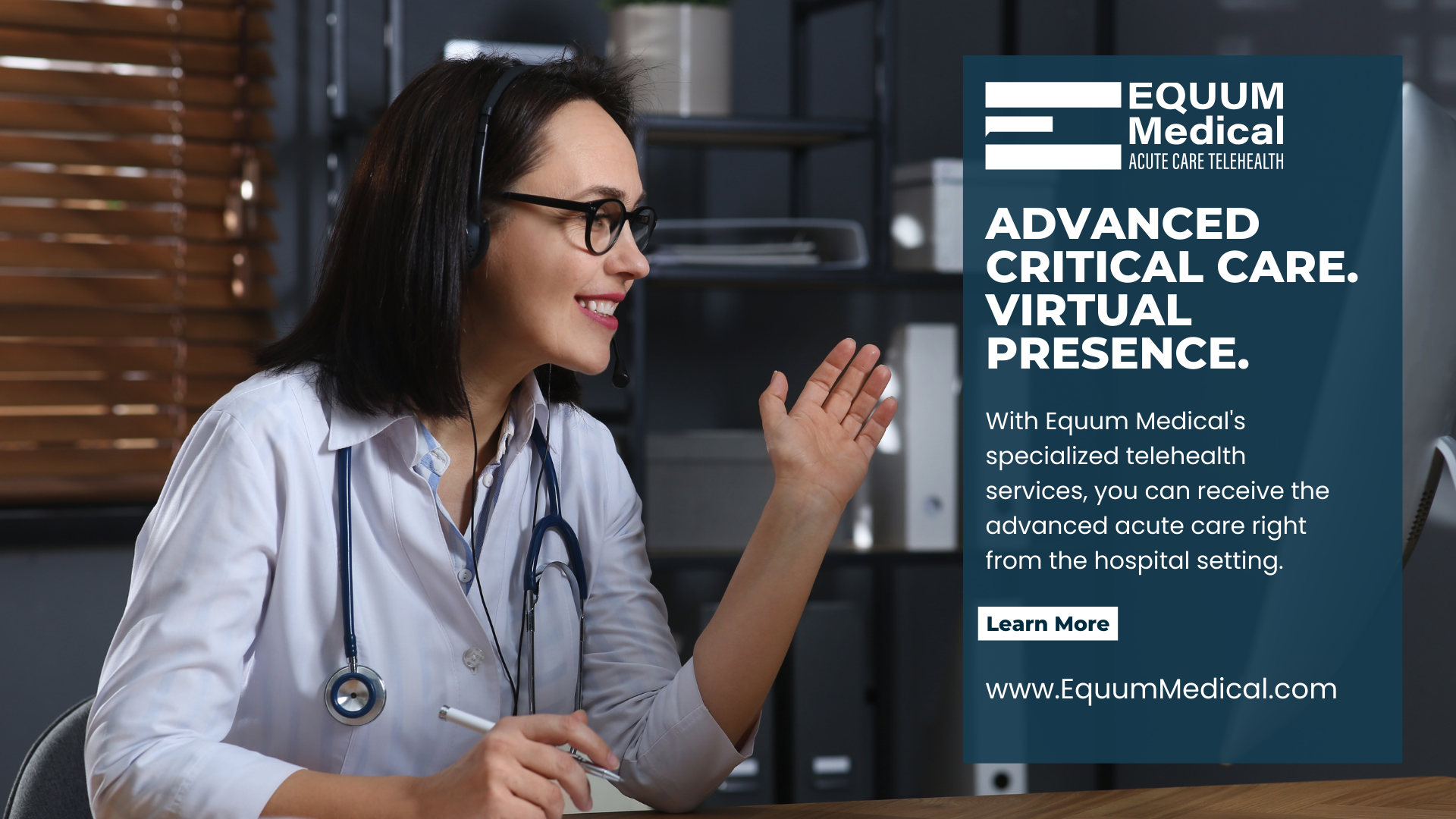
Equum Medical Ads (18).png

1 of 4

edit-media
NESA Overview

Videos

1 of 2

High Acuity Final Video.mp4

1 of 3

edit-media

Downloads

media thumbnail
equum-medical-lighthouse-series-vol-2 (3).pdf
media thumbnail
NESA Success Stories

Alternatives

Company Details

Need help narrowing down products?

Add more criteria to see your compatibility level for every vendor. It only takes a few minutes, just create a free account to get started.
back to top