Avia Logo

Compare Products


Jump to:
Categories
Solutions
Description
Compatibility Level
Clients
Product Capabilities
Use cases
EHR integrations
Client types
Awards
Differentiators
Health equity
Keywords
Media
Company details
Jump to:
Categories
Solutions
Description
Compatibility Level
Clients
Product Capabilities
Use cases
EHR integrations
Client types
Awards
Differentiators
Health equity
Keywords
Media
Company details
Adult RPM
Adult RPM

0 review

Categories

Solutions

Description

Product Description:

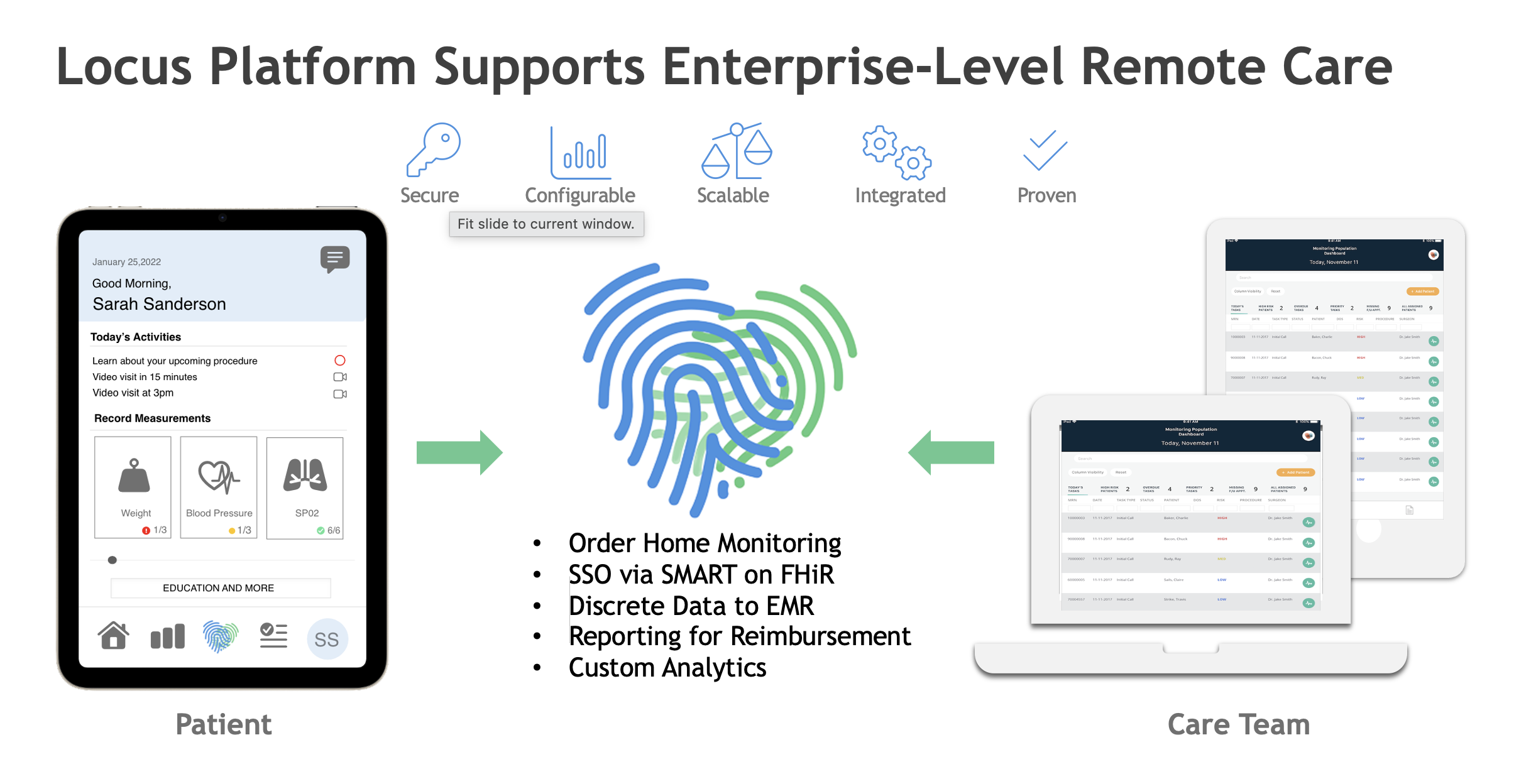
Full enterprise and EHR integrated Remote Monitoring platform for chronic care, home health and hospital at home populations. We also have afull diabetes platform taking the CGM values and putting them back in your EHR in order to decipher data that today is in varied vendors. 

About Locus Health:

Locus is a remote patient monitoring platform built to support both pediatric and adult care. We focus on four key areas to make remote care feel like a seamless extension of your health system.

Maximizing Your Tools: We help you get more value out of your current EHR and tech investments.

Supporting Your Staff: We design our workflows to match the reality of your team’s busy schedule, helping them work efficiently without burnout.

Freedom of Choice: We have a wide selection of pediatric and adult devices and are willing to evaluate new device partnerships on behalf of your system.

Proven Results: We help transform remote care into a strategic advantage by improving patient outcomes and generating a positive return on investment. Our approach engages patients of all ages and levels of digital literacy, assisting them in connecting devices and staying involved with the care programs at your health system.


Product Description:

Through its comprehensive integration of diverse data sources - including EHR, RPM and patient-generated insights - the Medical Brain has a complete understanding of the patient’s medical history and knowledge of the current situation in real-time. With this complete, whole-person understanding, the Medical Brain proactively identifies emerging health risks, care gaps, delays, and errors. 

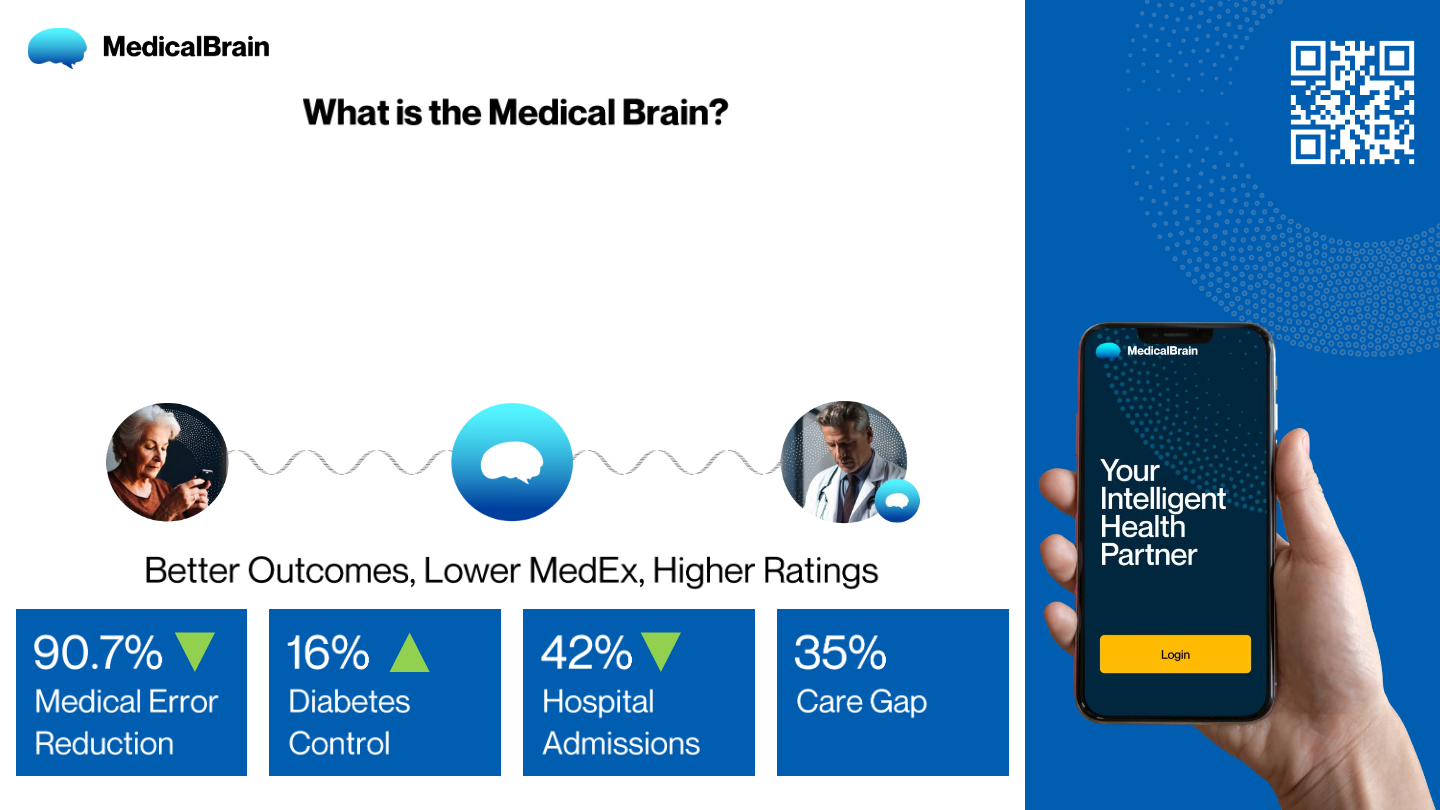
The Medical Brain is being used by provider groups, health systems, ACOs to help providers manage patients on their behalf so they can succeed with value-based care. Brain contacts providers and orchestrates care. This patient-first, real-time approach helps patients control chronic disease, reduce hospital days, while increasing provider productivity by 92% by eliminating patient communication and follow-up tasks from provider and office staff.  

The Medical Brain is being used by provider groups, health systems, ACOs to help providers manage patients on their behalf so they can succeed with value-based care.

About healthPrecision / Medical Brain:

Medical Brain is an AI-powered clinical assistant designed to enhance healthcare for both patients and providers. For patients, it offers personalized care by monitoring vital signs, providing health insights, and simplifying the management of appointments, medications, and follow-ups. This ensures proactive care and empowers patients to make informed health decisions. For providers, Medical Brain delivers real-time, data-driven insights to support accurate clinical decisions, streamlines communication within care teams, and automates administrative tasks, allowing more time for direct patient care and improving overall healthcare efficiency.

Compatibility level

Select which hospital or health system you work at and see a personalized compatibility level.

Clients

Select which hospital or health system you work at and see the client list

Product Capabilities

Locus Health provides the infrastructure to deliver behavioral health care, spiritual support, and social navigation through its configurable platform: Behavioral Health & Spiritual Support * Mental Health Pathways: The platform includes a dedicated Mental Health care pathway for adult populations. * Secure Therapy: Locus supports one-on-one and group counseling (up to 49 participants) via integrated Video Visits. * Mindfulness & Education: Clinicians can push Educational Resources directly to patients, which can include content on mindfulness, spiritual coping, and symptom management. * Music Therapy: The platform has been utilized to deliver music therapy to pediatric patients, facilitating calming techniques and emotional expression.

Locus acts as a digital bridge between clinic visits to supplement care, coordinate complex plans, and facilitate shared decision-making. Supplementing Care & Symptom Management * Virtual Check-ins: Clinicians can perform "virtual rounding" by reviewing patient-submitted vitals, photos, and videos. * Actionable Insights: Real-time alerts for out-of-range data allow providers to manage by exception and intervene before symptoms escalate. * Metric Collection: The platform automatically collects and syncs discrete data into EMR flowsheets, reducing manual charting. * Engagement & Shared Decision-Making * Reminders & Notifications: Configurable alerts keep patients on track with their care plans and notify providers of critical changes. * Patient Education: Providers can push targeted, digital resources to replace traditional paper binders. * Collaborative Tools: Integrated video and messaging allow providers to discuss data directly with patients and their loved ones to decide on next steps. Coordination & Analytics * Care Coordination: The platform captures time spent on care management to support reimbursement and tracks all interactions in the EMR. * Population Analytics: Dashboards provide high-level reports on engagement, outcomes, and program-wide metrics.

Locus provides several ways for caregivers to participate actively in the cancer care journey: Active Participation & Education * Education & Skills: Clinicians can push targeted Educational Resources to caregivers, providing training on clinical skills, medication management, and symptom tracking. * Active Monitoring: Caregivers can use the app to record vitals and answer Surveys on behalf of the patient, ensuring they are central to daily care. * Cancer Navigation: The Locus Navigator (developed with the NCI) helps caregivers coordinate complex schedules and overcome logistical barriers. Emotional & Community Support * Counseling: Integrated Video Visits allow caregivers to join 1-on-1 or group counseling, emotional support, or grief counseling sessions. * Real-time Support: In-App Messaging connects caregivers directly with the care team for immediate guidance or crisis support. * Coping Resources: Customizable pathways can include resources for mindfulness and emotional coping to manage caregiver burnout.

Locus utilizes its enterprise platform to connect patients with experts and trials through the following tools: Expert Connectivity & Second Opinions * Virtual Consultations: Secure Video Visits allow for remote 1-to-1 or group consultations with leading experts without travel. * Seamless Record Sharing: The platform integrates with EMRs to share discrete biometric data and patient summaries, ensuring experts have immediate access to current medical records. * Visual Data: Caregivers can securely send photos and videos to help remote specialists evaluate symptoms or physical findings. Trial Access & Navigation * Locus Navigator: Developed with the National Cancer Institute (NCI), this specialized platform helps navigate patients through complex care journeys, including clinical trial enrollment. * Addressing Barriers: Navigators use the platform to identify and resolve social or logistical barriers that might prevent a patient from accessing a trial. * Digital Concierge: Features like Simplified Scheduling and automated Appointment Reminders keep patients coordinated across multiple specialists and research sites.

Medical Brain possesses a sophisticated level of contextual understanding, built on a complete set of patient data from a variety of sources including both free text and structured notes from health system and provider EMRs, as well as feeds from clinical systems and RPM devices. In addition, the Medical Brain communicates with patients proactively and on-demand, capturing information about their current situation and conducts a clinical interview to capture the complete, holistic picture. With this multilateration approach, the Medical Brain understands the patient’s medical situation contextually and provides personalized, high precision clinical decisions in real-time.

Medical Brain seamlessly integrates with Electronic Health Records (EHR), including hospital and provider-based systems, as well as specialty systems and digital devices such as RPM. This integration streamlines data acquisition and analysis, and provider workflow, allowing for the efficient, timely and accurate use of historical and real-time patient data. With complete knowledge of the patient’s health condition, the Medical Brain delivers high-precision clinical insights to patients and providers for timely corrective action. Provider workflow is streamlined and interactions are recorded in the EHR and accessible to healthcare providers, thereby improving continuity of care.

Medical Brain rigorously protects patient privacy and adheres to HIPAA and other regulatory standards. It employs state-of-the-art encryption for data storage and transfer, conducts systematic security audits, and enforces strict access controls, ensuring that only authorized individuals have access to sensitive patient information.

Medical Brain engages users through naturalistic interactions, using advanced natural language processing technologies to understand and generate responses that mimic human conversation. This approach helps put patients at ease, simulating an interaction with a healthcare professional and improving overall user satisfaction and engagement.

Medical Brain is designed to handle a large volume of patients and growing volume of interactions to address large-scale population requirements. It supports scalability through robust cloud infrastructure and efficient data management, capable of maintaining high performance levels even as the number of users and the volume of data expand across various regions and healthcare settings. Our team of dedicated clinical professionals have streamlined implementation to enable rapid deployments which scale easily for providers and health systems.

Medical Brain keeps pace with the rapid advances in clinical care and in AI and healthcare technology. As new use cases are required, the Medical Brain team develops new clinical modules with evidence-based protocols and updates the clinical repository with the latest updates, including provider inputs, research, and evolving healthcare practices. This adaptability ensures that Medical Brain remains at the cutting edge of technology, capable of offering the most current and effective solutions in healthcare AI.

With bidirectional communication, Medical Brain facilitates synchronous and asynchronous interactions between patients and care teams 24/7. Patients can receive immediate support through the platform, whether it’s via messaging, video, or audio calls. This capability ensures continuous access to care, helping patients manage their health proactively, with the care team receiving notifications about any significant health changes.

Medical Brain provides extensive operational support for both patients and care teams. This includes logistics management, staff training, patient onboarding, and ongoing technical support. The platform aims to enhance clinician experiences by reducing friction in workflows, preventing burnout, and ensuring patients are supported throughout their care journey. Medical Brain’s comprehensive approach not only improves patient outcomes but also simplifies care delivery for providers, making it an invaluable tool in modern healthcare settings.

Medical Brain enables individuals to share real-time biometric and health data with their care teams from outside the hospital or clinic. This is done through digital technologies, such as wearables and mobile devices, that continuously monitor health metrics (e.g., heart rate, blood pressure, glucose levels). The platform allows care teams to monitor patient data remotely and adjust care as needed, empowering proactive and continuous care beyond in-person visits.

Medical Brain uses advanced analytics to identify patients at risk of worsening conditions or potential hospitalization. By analyzing incoming patient data in real-time, the platform recognizes patterns indicative of deteriorating health, flagging patients for timely intervention. This predictive capability supports early detection of issues, reducing the likelihood of critical events like emergency room visits or hospitalizations.

Use Cases

Description:

Description:

Locus Health offers a customizable, enterprise-level remote patient monitoring (RPM) solution that serves over 70 different pediatric and adult populations. Its core use cases focus on bridging the gap between hospital and home through clinical surveillance and care coordination.

Pediatric use cases:

Pediatric use cases:

The platform is widely used by leading pediatric hospitals and health systems to support fragile patient populations.

  • Cardiology: High-risk cardiology, heart failure, and specific programs like TRAC (Tele-Remote Assessment for Children) and VAD (Ventricular Assist Device).
  • Neonatal (NICU): Managing complex discharges involving NG tubes or supplemental oxygen, as well as tracking "feeders and growers" and substance-exposed newborns.
  • Pulmonary & General: Post-discharge care for asthma, cystic fibrosis, and tracheostomy/ventilator-dependent patients. It also supports outpatient antimicrobial therapy, palliative care, and solid organ transplants.

Users:

Users:

Locus provides enterprise-level monitoring for acute conditions, chronic disease management, and surgical recovery.

Description:

The Medical Brain’s Patient-Centric Clinical Decision Support combined with Real-Time Care Orchestration identifies risks in real-time and guides immediate corrective action for best outcomes.

1. The Medical Brain® Diabetes module offers evidence-based guidance for the full spectrum of diabetes and related conditions, focused on establishing and maintaining excellent diabetic control with medical management and lifestyle modifications. The Medical Brain is in constant contact with diabetic patients helping them to manage the minute-to-minute intricacies of their condition aiming for their target HgbA1c goals. Diabetes is a condition with multiple co-morbidities and the Medical Brain uses evidence-based guidelines to manage those co-morbidities together to get the best outcomes. As an example, Hypertension can cause blood sugars to rise and both conditions need to be controlled together. As a result, the Medical Brain controls hard to control diabetics with real-time information including well-coordinated trend data for decision-making.  

2. The Medical Brain’s Renal Care Module spans conditions ranging from mild to end-stage renal failure and provide evidence-based guidance on renal specific conditions as well as the related co-morbidities such as diabetes and hypertension. This multi-lateral patient view allows the Medical Brain to guide guides physicians and their patients to maintain an optimal clinical steady state and minimize renal failure progression while driving the best outcomes in cost and quality performance.

3. Medical Brain’s health failure module covers the full spectrum of heart failure conditions from pre-clinical (asymptomatic, Stage B HF) through Stage D heart failures. The module includes evidence-based guidelines and best practices, so patients, cardiologists, and PCPs stay aligned with the goal of maintaining the most stable clinical state. Medical Brain detects risks and facilitates the right intervention by the right provider when adjustments in care are needed.

4. The Hypertension module helps patients gain and maintain control over hypertension with this clinical module incorporating best practices from leading medical experts. The Hypertension Module also includes coordination with other related chronic conditions and delivers trend analyses to patients and providers to manage hypertension 24/7. Medical Brain® directly connects patients and providers for effective care without gaps, miscommunications, or delays.

5. The Medical Brain covers the full spectrum of cardiac arrhythmias, including premature atrial contractions, supraventricular tachycardia or paroxysmal SVT, sick sinus syndrome, atrial fibrillation, and others. The Medical Brain includes evidence-based guidelines and best practices for treating arrhythmias and facilitates the right intervention by providers to achieve a well-controlled, appropriately monitored, and effectively managed clinical situation.

6. This module covers the full spectrum of valvular heart diseases, including aortic stenosis and mitral regurgitation. The Medical Brain® Valvular Disease Module includes evidence-based guidelines and best practices for treating valvular heart disease and related conditions. With coordinated, proactive care, patients can experience a better quality of life without incurring unnecessary spending. 

7. Hyperlipidemia is an important module because it influences many chronic conditions. The Medical Brain guides providers and patients in achieving the optimal lipid profile through lifestyle modifications and appropriate medications. This module includes the full spectrum of hyperlipidemia and related conditions to facilitate medical management and drive better outcomes.  

8. The Orthopedics module addresses a range of both surgical and medical orthopedic conditions. The Module is tailored to evidence-based practices for pre-op patient management including chronic conditions, through the post-op recovery phase including return to functionality and prevention of infections. The Module includes best practices and guidelines from leading Orthopedics organizations.  

9. The Obstetrics module includes evidence-based guidelines and best practices that cover a range of normal through high-risk pregnancies with a focus on assuring accuracy and reducing risk and error to improve patient safety in OB. Clinical guidelines are applied throughout the OB continuum including prenatal, intrapartum and the postpartum periods.  

The OB module and the AI clinical decision support system is tailored to reduce adverse events and prevent OB risk and systems related gaps and delays in care which place women at risk.  

10. The Medical Brain includes evidence-based guidelines, best practices, and protocols for COPD, ranging across the full spectrum of severity. Complex pulmonary conditions such as COPD, exist with co-morbidities including hypertension, cardiac disease and diabetes, and the COPD module coordinates across the full spectrum.

11. This module covers the full spectrum of infectious diseases across outpatient and inpatient settings, including from sepsis and septic shock. This module applies to patients with emerging infectious such as post-surgical signs of infection all the way through septic shock.  

12. The radiology module covers evidence-based guidelines and best practices for selecting the appropriate imaging and radiology studies for each specific case. With Medical Brain, providers can optimize utilization based on the current appropriate use criteria and drive the best outcomes in cost and quality performance through real-time precision.

13. The Medical Brain offers evidence-based guidelines and best practices in lifestyle modifications for multiple conditions and diseases, assisting each person in maintaining the best preventive measures to avoid diseases and disease exacerbations while maximizing their quality of life. This is particularly important for chronic disease management which is influenced by medical as well as social conditions and determinants.  

Pediatric use cases:

None provided

Users:

Diabetes Patients 

Renal Patients 

Heart Failure Patients 

Hypertension Patients 

Arrhythmia Patients 

Valvular Heart Disease Patients 

Hyperlipidemia Patients 

Orthopedic Patients 

Obstetric Patients 

COPD Patients 

Infectious Disease Patients 

Radiology Patients 

Lifestyle Modification Patients 

EHR Integrations

Integrations:

Acute care EMR, Ambulatory EMR, Patient portal, Pop health platform, Home health, Behavioral health

EMR Integration & Relevant Hardware:

None provided

EMRs Supported:

Epic, Cerner, Meditech, Allscripts, NextGen, athena, McKesson, Point Click Care

Hardware Compatibility:

Mobile / Tablet (native app), Mobile / Tablet (web optimized), Desktop

Integrations:

Acute care EMR, Ambulatory EMR, Ancillary EMR, ERP system, Patient portal, Pop health platform, Home health, Behavioral health, Community based organizations, ADT, Access +/or revenue cycle, Credentialing, Website / public online sources, Other

EMR Integration & Relevant Hardware:

Required

EMRs Supported:

Epic, Cerner, Meditech, Allscripts, NextGen, athena, GE, eClinicalWorks, McKesson, Other, Allscripts/Eclipsys, Athenahealth, Azalea Health/Prognosis, CPSI, Evident, Healthland, MEDHOST, MedWorx, QuadraMed, Self-developed, Would prefer not to disclose, Point Click Care

Hardware Compatibility:

Desktop, Mobile / Tablet (web optimized), Mobile / Tablet (native app), Other

Client Types

Awards

edit-media
edit-media
edit-media
edit-media

Differentiators

Differentiators vs EHR Functionality:

Strategically, Locus is focused on: 

(1) helping our customer health systems leverage the critical investment they’ve made in existing technology platforms like the EHR, creating impact for key patient populations where remote care management can most effectively drive outcomes and return on investment. 

(2) meeting our health system care teams where they are, recognizing the reality of patient monitoring and navigation needs vs available provider resources and ensuring that our platform’s ability to collect, synthesize, and transmit key population and patient-specific data supports the efficiency of their teams’ workflows and innovative approaches to coordinated care. 

(3) providing a single-platform “middleware plus” approach to integration, allowing health system teams to choose their preferred remote devices and seamlessly integrate with other relevant patient information via Locus to the EHR 

(4) helping our health system customers view and establish Remote Care Management (both RPM and Navigation) as a strategic capability, supporting both enhanced quality outcomes and becoming a positive-ROI profit center (via enhanced reimbursement revenue and/or lower preventable costs). 

Differentiators vs Competitors:

Strategically, Locus is focused on: 

(1) helping our customer health systems leverage the critical investment they’ve made in existing technology platforms like the EHR, creating impact for key patient populations where remote care management can most effectively drive outcomes and return on investment. 

(2) meeting our health system care teams where they are, recognizing the reality of patient monitoring and navigation needs vs available provider resources and ensuring that our platform’s ability to collect, synthesize, and transmit key population and patient-specific data supports the efficiency of their teams’ workflows and innovative approaches to coordinated care. 

(3) providing a single-platform “middleware plus” approach to integration, allowing health system teams to choose their preferred remote devices and seamlessly integrate with other relevant patient information via Locus to the EHR 

(4) helping our health system customers view and establish Remote Care Management (both RPM and Navigation) as a strategic capability, supporting both enhanced quality outcomes and becoming a positive-ROI profit center (via enhanced reimbursement revenue and/or lower preventable costs). 

Differentiators vs EHR Functionality:

The Medical Brain, an AI-powered digital clinical assistant, offers significant enhancements over a typical Electronic Health Record (EHR) system found in provider offices. Unlike traditional EHRs, which primarily serve as structured data repositories with limited capabilities for interpreting free-text entries, the Medical Brain seamlessly integrates and interprets both structured and unstructured data from various sources. This capability ensures a comprehensive view of a patient's health that is dynamically updated through interactions with patients and providers in natural language. Furthermore, the Medical Brain's advanced decision support algorithms provide recommendations with 98% accuracy, based on a holistic analysis of patient data, thereby facilitating more informed clinical decisions. By layering on top of existing EHR systems, the Medical Brain not only enhances data utility and clinical workflow but also actively contributes to the medical records it accesses, reducing the likelihood of errors and omissions and greatly improving the efficiency and effectiveness of healthcare delivery.

Differentiators vs Competitors:

The Medical Brain differentiates itself from competitors in the digital healthcare space by offering a comprehensive, all-in-one solution that integrates care coordination, EHR interoperability, symptom analysis, and RPM. While competitors may offer one or a few of these features, Medical Brain excels by incorporating all these functionalities into a single platform, enhancing both provider efficiency and patient outcomes. Its capability to engage in dialogues with both providers and patients sets it apart, making it a truly holistic approach to patient care. This dual communication capability allows Medical Brain to gather and utilize a wider range of patient data, leading to highly accurate health assessments and personalized care plans.

Moreover, Medical Brain significantly reduces the administrative burden on healthcare providers, having reduced follow-up administrative tasks by 92%, thereby allowing providers more time to focus on direct patient care. The system’s decision-making support boasts a 98% accuracy rate, which is notably superior to that of any competitor. This high level of precision and efficiency in Medical Brain’s operations not only streamlines workflows but also ensures that clinical decisions are both timely and reliable. By serving as a platform that effectively communicates with and benefits both providers and patients, Medical Brain goes beyond traditional digital assistants and positions itself as a crucial component in modern healthcare ecosystems, driving improvements in healthcare delivery and patient satisfaction.

Health Equity

Keywords

Images

1 of 4

edit-media
Locus EMR Compliment.png

1 of 4

edit-media
Nephrology Case - Medical Brain.gif

Videos

No videos provided

1 of 2

edit-media

Downloads

media thumbnail
Oncology - Remote Home Monitoring of Patients With Cancer During the COVID Pandemic- A Pilot Study.pdf
media thumbnail
Medical Brain Conference Handout - back.pdf

Alternatives

Company Details

Founded in 2009

Need help narrowing down products?

Add more criteria to see your compatibility level for every vendor. It only takes a few minutes, just create a free account to get started.
back to top