Avia Logo

Compare Products


Jump to:
Categories
Solutions
Description
Compatibility Level
Clients
Product Capabilities
Use cases
EHR integrations
Client types
Awards
Differentiators
Health equity
Keywords
Media
Company details
Jump to:
Categories
Solutions
Description
Compatibility Level
Clients
Product Capabilities
Use cases
EHR integrations
Client types
Awards
Differentiators
Health equity
Keywords
Media
Company details

Categories

Solutions

Description

Product Description:

Through its comprehensive integration of diverse data sources - including EHR, RPM and patient-generated insights - the Medical Brain has a complete understanding of the patient’s medical history and knowledge of the current situation in real-time. With this complete, whole-person understanding, the Medical Brain proactively identifies emerging health risks, care gaps, delays, and errors. 

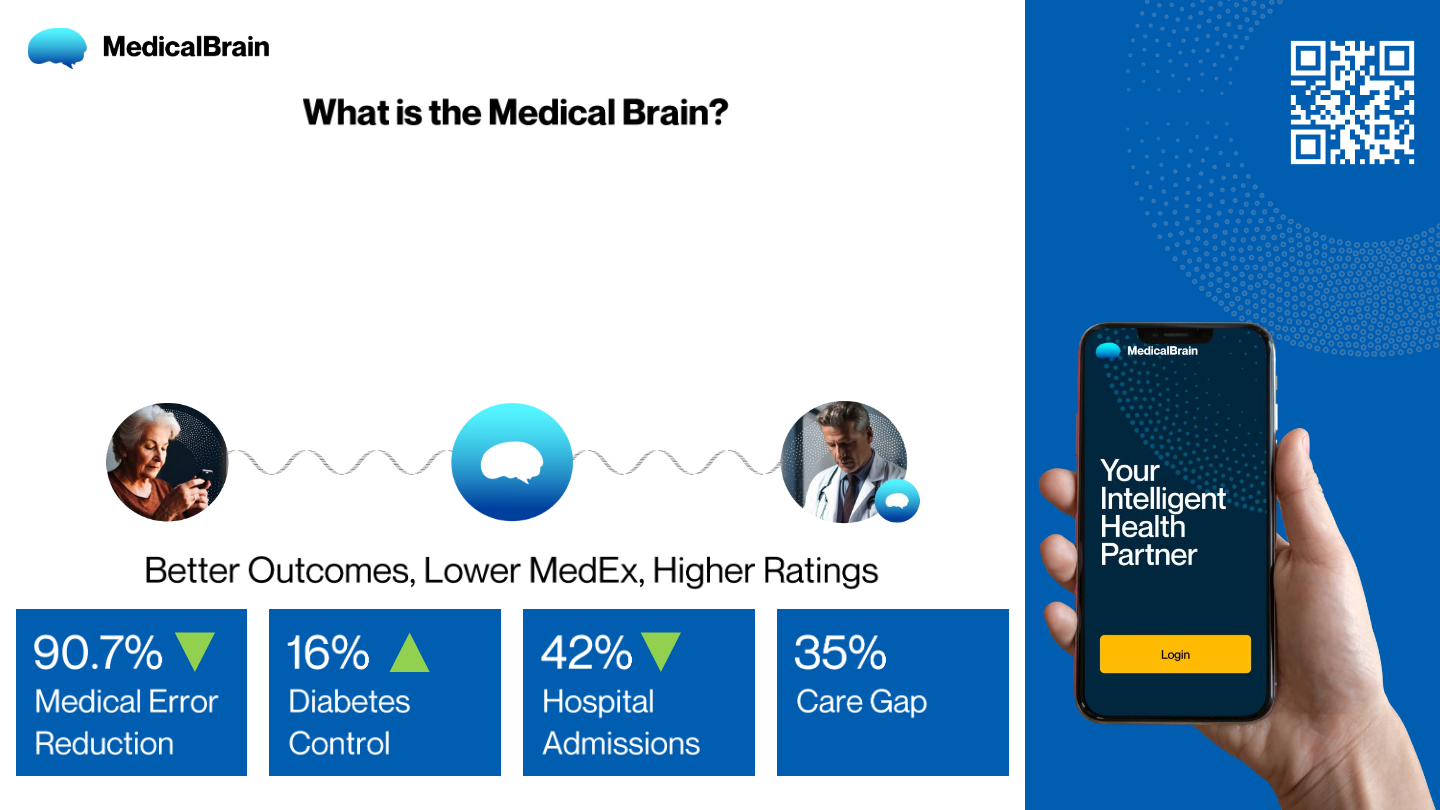
The Medical Brain is being used by provider groups, health systems, ACOs to help providers manage patients on their behalf so they can succeed with value-based care. Brain contacts providers and orchestrates care. This patient-first, real-time approach helps patients control chronic disease, reduce hospital days, while increasing provider productivity by 92% by eliminating patient communication and follow-up tasks from provider and office staff.  

The Medical Brain is being used by provider groups, health systems, ACOs to help providers manage patients on their behalf so they can succeed with value-based care.

About healthPrecision / Medical Brain:

Medical Brain is an AI-powered clinical assistant designed to enhance healthcare for both patients and providers. For patients, it offers personalized care by monitoring vital signs, providing health insights, and simplifying the management of appointments, medications, and follow-ups. This ensures proactive care and empowers patients to make informed health decisions. For providers, Medical Brain delivers real-time, data-driven insights to support accurate clinical decisions, streamlines communication within care teams, and automates administrative tasks, allowing more time for direct patient care and improving overall healthcare efficiency.

Product Description:

Nesa: The Virtual Care Operating System That Disappears Into Epic Workflow

NESA provides the only Epic Toolbox-listed virtual care infrastructure that elegantly integrates into existing clinical workflows. Unlike traditional point solutions that add vendor complexity, NESA's ONE platform replaces 3-7 separate contracts with a single, unified system that scales across unlimited use cases—from virtual nursing and telesitting to tele-stroke, NICU, ED triage, and specialist consults.

One Platform. One Integration. Unlimited Workflows.

Built on NVIDIA edge-based AI, NESA Vision One combines computer vision (17+ body joints, object detection, room context) and natural language processing in a single device that sees patient movement, listens to care conversations, and acts instantly—all while maintaining complete data sovereignty within your hospital network. Every camera operates as its own computer, enabling distributed processing that optimizes power consumption while running multiple applications simultaneously.

Clinical-Grade Infrastructure

  • 4K high-resolution optics with 360° awareness and 25× optical PTZ
  • Real-time AI processing with zero cloud latency—all data stays on-premise
  • Direct Epic flowsheet write-back, ADT feeds, and native ECAL/CAL integration
  • HIPAA-compliant, NDAA-compliant hardware with built-in redundancy
  • Whisper AI for crystal-clear audio capture even in noisy clinical environments

Measurable Impact

Trusted by health systems including Duke, Baylor Scott & White, and UT Health San Antonio:

  • Zero-Latency Performance: Real-time fall detection and clinical event monitoring that works even if the hospital network goes down.
  • Automated Documentation: AI that captures clinical events and pre-populates notes directly into Epic Hyperspace.
  • 4K Dual Verification: A 30% reduction in medication errors by allowing a remote nurse to verify high-risk meds via high-definition video.
  • Efficiency Gains: 73.9% of discharge orders are now completed by 10am, compared to a 46.2% baseline.
  • Clinical Safety: A 37.5% reduction in falls with injury and an 80% reduction in severe hospital-acquired pressure injuries (HAPI).
  • High Adoption: 100% nurse technology adoption rates, with patients reuqesting rooms fitted with Nesa ONE. 

Designed by Clinicians, for Clinicians

Nesa is recognized by Joint Commission surveyors as "the standard that should exist in patient care across all hospitals" and partners with Magnet-designated organizations. The platform is certified to NHS clinical risk management standards (DCB 0129) for international deployment.

Scale your best clinicians across your entire system—without extending vendor contracts, security reviews, or integration backlogs.

About Nesa:

Industry leading, Epic Toolbox 2025 and 2026 for Inpatient Virtual Care platform combining edge AI, computer vision, and native workflow integration.

Compatibility level

Select which hospital or health system you work at and see a personalized compatibility level.

Clients

Select which hospital or health system you work at and see the client list

Product Capabilities

Medical Brain possesses a sophisticated level of contextual understanding, built on a complete set of patient data from a variety of sources including both free text and structured notes from health system and provider EMRs, as well as feeds from clinical systems and RPM devices. In addition, the Medical Brain communicates with patients proactively and on-demand, capturing information about their current situation and conducts a clinical interview to capture the complete, holistic picture. With this multilateration approach, the Medical Brain understands the patient’s medical situation contextually and provides personalized, high precision clinical decisions in real-time.

Medical Brain seamlessly integrates with Electronic Health Records (EHR), including hospital and provider-based systems, as well as specialty systems and digital devices such as RPM. This integration streamlines data acquisition and analysis, and provider workflow, allowing for the efficient, timely and accurate use of historical and real-time patient data. With complete knowledge of the patient’s health condition, the Medical Brain delivers high-precision clinical insights to patients and providers for timely corrective action. Provider workflow is streamlined and interactions are recorded in the EHR and accessible to healthcare providers, thereby improving continuity of care.

Medical Brain rigorously protects patient privacy and adheres to HIPAA and other regulatory standards. It employs state-of-the-art encryption for data storage and transfer, conducts systematic security audits, and enforces strict access controls, ensuring that only authorized individuals have access to sensitive patient information.

Medical Brain engages users through naturalistic interactions, using advanced natural language processing technologies to understand and generate responses that mimic human conversation. This approach helps put patients at ease, simulating an interaction with a healthcare professional and improving overall user satisfaction and engagement.

Medical Brain is designed to handle a large volume of patients and growing volume of interactions to address large-scale population requirements. It supports scalability through robust cloud infrastructure and efficient data management, capable of maintaining high performance levels even as the number of users and the volume of data expand across various regions and healthcare settings. Our team of dedicated clinical professionals have streamlined implementation to enable rapid deployments which scale easily for providers and health systems.

Medical Brain keeps pace with the rapid advances in clinical care and in AI and healthcare technology. As new use cases are required, the Medical Brain team develops new clinical modules with evidence-based protocols and updates the clinical repository with the latest updates, including provider inputs, research, and evolving healthcare practices. This adaptability ensures that Medical Brain remains at the cutting edge of technology, capable of offering the most current and effective solutions in healthcare AI.

With bidirectional communication, Medical Brain facilitates synchronous and asynchronous interactions between patients and care teams 24/7. Patients can receive immediate support through the platform, whether it’s via messaging, video, or audio calls. This capability ensures continuous access to care, helping patients manage their health proactively, with the care team receiving notifications about any significant health changes.

Medical Brain provides extensive operational support for both patients and care teams. This includes logistics management, staff training, patient onboarding, and ongoing technical support. The platform aims to enhance clinician experiences by reducing friction in workflows, preventing burnout, and ensuring patients are supported throughout their care journey. Medical Brain’s comprehensive approach not only improves patient outcomes but also simplifies care delivery for providers, making it an invaluable tool in modern healthcare settings.

Medical Brain enables individuals to share real-time biometric and health data with their care teams from outside the hospital or clinic. This is done through digital technologies, such as wearables and mobile devices, that continuously monitor health metrics (e.g., heart rate, blood pressure, glucose levels). The platform allows care teams to monitor patient data remotely and adjust care as needed, empowering proactive and continuous care beyond in-person visits.

Medical Brain uses advanced analytics to identify patients at risk of worsening conditions or potential hospitalization. By analyzing incoming patient data in real-time, the platform recognizes patterns indicative of deteriorating health, flagging patients for timely intervention. This predictive capability supports early detection of issues, reducing the likelihood of critical events like emergency room visits or hospitalizations.

Fixed room displays with intuitive patient/family-facing UI showing care team info, patient education, and visit schedules in easy-to-read format

Fully configurable unit-specific displays with health system branding, customizable layouts for different care settings (ICU, Med-Surg, Behavioral Health), and role-based information presentation

Epic Toolbox 2025 and 2026, Epic-native integration providing real-time EHR updates, automated alerts for patient conditions, and seamless device connectivity through existing hospital infrastructure

AI-powered patient monitoring with continuous video analytics detecting falls, mobility changes, and safety events; predictive algorithms enabling proactive intervention

Enterprise-grade platform with 99.9% uptime, HIPAA-compliant security, redundant systems, and precise data transmission with clinical-grade accuracy for virtual care delivery

Platform is clinician-focused for virtual nursing/telesitting; patient environmental controls (lights, temperature) are being released in 2026

Native Epic integration enabling automated clinical workflow alignment, vitals synchronization, and coordination across hospital systems without custom interfaces. See Epic Toolbox Blueprint for 2025 and 2026 to understand integration depth.

Edge computing architecture with NVIDIA chips enables distributed processing where each camera operates as its own computer, running multiple applications simultaneously while optimizing power consumption and reducing centralized data center load

Bi-directional audio/video communication between patients and remote care teams, with one-touch calling through in-room displays and mobile devices

Virtual care teams access real-time Epic patient context, care team assignments, and clinical summaries at point of care; facilitates collaboration between bedside and remote clinicians through integrated communication

Use Cases

Description:

The Medical Brain’s Patient-Centric Clinical Decision Support combined with Real-Time Care Orchestration identifies risks in real-time and guides immediate corrective action for best outcomes.

1. The Medical Brain® Diabetes module offers evidence-based guidance for the full spectrum of diabetes and related conditions, focused on establishing and maintaining excellent diabetic control with medical management and lifestyle modifications. The Medical Brain is in constant contact with diabetic patients helping them to manage the minute-to-minute intricacies of their condition aiming for their target HgbA1c goals. Diabetes is a condition with multiple co-morbidities and the Medical Brain uses evidence-based guidelines to manage those co-morbidities together to get the best outcomes. As an example, Hypertension can cause blood sugars to rise and both conditions need to be controlled together. As a result, the Medical Brain controls hard to control diabetics with real-time information including well-coordinated trend data for decision-making.  

2. The Medical Brain’s Renal Care Module spans conditions ranging from mild to end-stage renal failure and provide evidence-based guidance on renal specific conditions as well as the related co-morbidities such as diabetes and hypertension. This multi-lateral patient view allows the Medical Brain to guide guides physicians and their patients to maintain an optimal clinical steady state and minimize renal failure progression while driving the best outcomes in cost and quality performance.

3. Medical Brain’s health failure module covers the full spectrum of heart failure conditions from pre-clinical (asymptomatic, Stage B HF) through Stage D heart failures. The module includes evidence-based guidelines and best practices, so patients, cardiologists, and PCPs stay aligned with the goal of maintaining the most stable clinical state. Medical Brain detects risks and facilitates the right intervention by the right provider when adjustments in care are needed.

4. The Hypertension module helps patients gain and maintain control over hypertension with this clinical module incorporating best practices from leading medical experts. The Hypertension Module also includes coordination with other related chronic conditions and delivers trend analyses to patients and providers to manage hypertension 24/7. Medical Brain® directly connects patients and providers for effective care without gaps, miscommunications, or delays.

5. The Medical Brain covers the full spectrum of cardiac arrhythmias, including premature atrial contractions, supraventricular tachycardia or paroxysmal SVT, sick sinus syndrome, atrial fibrillation, and others. The Medical Brain includes evidence-based guidelines and best practices for treating arrhythmias and facilitates the right intervention by providers to achieve a well-controlled, appropriately monitored, and effectively managed clinical situation.

6. This module covers the full spectrum of valvular heart diseases, including aortic stenosis and mitral regurgitation. The Medical Brain® Valvular Disease Module includes evidence-based guidelines and best practices for treating valvular heart disease and related conditions. With coordinated, proactive care, patients can experience a better quality of life without incurring unnecessary spending. 

7. Hyperlipidemia is an important module because it influences many chronic conditions. The Medical Brain guides providers and patients in achieving the optimal lipid profile through lifestyle modifications and appropriate medications. This module includes the full spectrum of hyperlipidemia and related conditions to facilitate medical management and drive better outcomes.  

8. The Orthopedics module addresses a range of both surgical and medical orthopedic conditions. The Module is tailored to evidence-based practices for pre-op patient management including chronic conditions, through the post-op recovery phase including return to functionality and prevention of infections. The Module includes best practices and guidelines from leading Orthopedics organizations.  

9. The Obstetrics module includes evidence-based guidelines and best practices that cover a range of normal through high-risk pregnancies with a focus on assuring accuracy and reducing risk and error to improve patient safety in OB. Clinical guidelines are applied throughout the OB continuum including prenatal, intrapartum and the postpartum periods.  

The OB module and the AI clinical decision support system is tailored to reduce adverse events and prevent OB risk and systems related gaps and delays in care which place women at risk.  

10. The Medical Brain includes evidence-based guidelines, best practices, and protocols for COPD, ranging across the full spectrum of severity. Complex pulmonary conditions such as COPD, exist with co-morbidities including hypertension, cardiac disease and diabetes, and the COPD module coordinates across the full spectrum.

11. This module covers the full spectrum of infectious diseases across outpatient and inpatient settings, including from sepsis and septic shock. This module applies to patients with emerging infectious such as post-surgical signs of infection all the way through septic shock.  

12. The radiology module covers evidence-based guidelines and best practices for selecting the appropriate imaging and radiology studies for each specific case. With Medical Brain, providers can optimize utilization based on the current appropriate use criteria and drive the best outcomes in cost and quality performance through real-time precision.

13. The Medical Brain offers evidence-based guidelines and best practices in lifestyle modifications for multiple conditions and diseases, assisting each person in maintaining the best preventive measures to avoid diseases and disease exacerbations while maximizing their quality of life. This is particularly important for chronic disease management which is influenced by medical as well as social conditions and determinants.  

Pediatric use cases:

None provided

Users:

Diabetes Patients 

Renal Patients 

Heart Failure Patients 

Hypertension Patients 

Arrhythmia Patients 

Valvular Heart Disease Patients 

Hyperlipidemia Patients 

Orthopedic Patients 

Obstetric Patients 

COPD Patients 

Infectious Disease Patients 

Radiology Patients 

Lifestyle Modification Patients 

Description:

Nesa is is the ONE platform for any use case from admission to transition and provides Epic-native virtual care infrastructure with AI-powered clinical intelligence, enabling health systems to scale clinical capacity across unlimited workflows through a single platform and integration.

Core Capabilities:

Virtual Nursing

Deploy hub-and-spoke models where virtual clinicians monitor 12-16 patients with AI-powered alerts, provide admission/discharge support, medication verification, and documentation assistance—all within Epic workflow.

AI-Powered Safety Monitoring

Continuous computer vision analytics detect fall risks, monitor patient positioning, and track behavioral changes, writing data directly to Epic flowsheets with <15-second alert-to-intervention times.

Specialist Consults

Connect neurologists, neonatologists, and intensivists to multiple facilities via Epic Monitor for stroke assessment, NICU resuscitation, ICU backup, and tele-specialty services.

ED Virtual Triage

Conduct intake via Epic ASAP, expedite orders, reduce LWBS rates, streamline bed assignment, and reduce boarding times through virtual physician assessment.

Hospitalist Coverage

Enable after-hours and multi-site coverage where hospitalists admit from multiple EDs simultaneously, provide backup coverage, and eliminate admission delays.

Admission, Discharge & Transfer (ADT)

Streamline ADT workflows virtually through Epic integration, reducing patient wait times and improving care coordination across transitions.

Ambient Clinical Documentation

Capture care conversations and automatically document in Epic through ambient voice intelligence, reducing documentation burden without leaving workflow.

Surgical/OR Support

Virtual nurses document procedures in Epic OpTime while surgical teams stay focused on patient care, capturing supplies and interventions in real-time.

Care Coordination

Conduct home assessments, coordinate post-acute transitions, and enable family participation via MyChart Bedside TV integration.

Behavioral Health Monitoring

Remotely monitor patient behavior with AI-powered detection to ensure real-time patient and staff safety, particularly in psychiatric and detox settings.

Pediatric use cases:

Pediatric & Family Support

  • eNICU and ePICU: Enhance NICU and PICU care quality with specialist access and family engagement, PICU or NICU to ED support, delivery room support
  • Mother-Baby Monitoring: Support postpartum care, lactation support, and mothers undergoing detoxification
  • Newborn Observation: Manage respiratory decompensations with continuous AI-powered monitoring
  • Patient & Family Education: Reduce bedside time pressure while improving care experience
  • Virtual Family Check-ins: Provide family-centered care through MyChart Bedside
Users:

Virtual nurses, bedside nurses, hospitalists, specialists (neurologists, neonatologists, intensivists), ED physicians, OR teams, care coordinators, administrators, patients, and family members

EHR Integrations

Integrations:

Acute care EMR, Ambulatory EMR, Ancillary EMR, ERP system, Patient portal, Pop health platform, Home health, Behavioral health, Community based organizations, ADT, Access +/or revenue cycle, Credentialing, Website / public online sources, Other

EMR Integration & Relevant Hardware:

Required

EMRs Supported:

Epic, Cerner, Meditech, Allscripts, NextGen, athena, GE, eClinicalWorks, McKesson, Other, Allscripts/Eclipsys, Athenahealth, Azalea Health/Prognosis, CPSI, Evident, Healthland, MEDHOST, MedWorx, QuadraMed, Self-developed, Would prefer not to disclose, Point Click Care

Hardware Compatibility:

Desktop, Mobile / Tablet (web optimized), Mobile / Tablet (native app), Other

Integrations:

Acute care EMR, Ambulatory EMR, ADT, Other

EMR Integration & Relevant Hardware:

Required

EMRs Supported:

Epic

Hardware Compatibility:

Desktop, Mobile / Tablet (web optimized), Mobile / Tablet (native app), Other

Client Types

Awards

edit-media
edit-media
edit-media

Differentiators

Differentiators vs EHR Functionality:

The Medical Brain, an AI-powered digital clinical assistant, offers significant enhancements over a typical Electronic Health Record (EHR) system found in provider offices. Unlike traditional EHRs, which primarily serve as structured data repositories with limited capabilities for interpreting free-text entries, the Medical Brain seamlessly integrates and interprets both structured and unstructured data from various sources. This capability ensures a comprehensive view of a patient's health that is dynamically updated through interactions with patients and providers in natural language. Furthermore, the Medical Brain's advanced decision support algorithms provide recommendations with 98% accuracy, based on a holistic analysis of patient data, thereby facilitating more informed clinical decisions. By layering on top of existing EHR systems, the Medical Brain not only enhances data utility and clinical workflow but also actively contributes to the medical records it accesses, reducing the likelihood of errors and omissions and greatly improving the efficiency and effectiveness of healthcare delivery.

Differentiators vs Competitors:

The Medical Brain differentiates itself from competitors in the digital healthcare space by offering a comprehensive, all-in-one solution that integrates care coordination, EHR interoperability, symptom analysis, and RPM. While competitors may offer one or a few of these features, Medical Brain excels by incorporating all these functionalities into a single platform, enhancing both provider efficiency and patient outcomes. Its capability to engage in dialogues with both providers and patients sets it apart, making it a truly holistic approach to patient care. This dual communication capability allows Medical Brain to gather and utilize a wider range of patient data, leading to highly accurate health assessments and personalized care plans.

Moreover, Medical Brain significantly reduces the administrative burden on healthcare providers, having reduced follow-up administrative tasks by 92%, thereby allowing providers more time to focus on direct patient care. The system’s decision-making support boasts a 98% accuracy rate, which is notably superior to that of any competitor. This high level of precision and efficiency in Medical Brain’s operations not only streamlines workflows but also ensures that clinical decisions are both timely and reliable. By serving as a platform that effectively communicates with and benefits both providers and patients, Medical Brain goes beyond traditional digital assistants and positions itself as a crucial component in modern healthcare ecosystems, driving improvements in healthcare delivery and patient satisfaction.

Differentiators vs EHR Functionality:

Nesa is not an EHR replacement but the virtual care operating system that disappears inside Epic workflow. As the only inpatient virtual care platform listed in Epic Toolbox, Nesa meets Epic's recommended integration practices with native ECAL/CAL integration, direct flowsheet write-back, and ADT feeds—eliminating middleware and enabling clinicians to deliver virtual care without ever leaving Epic.

Differentiators vs Competitors:
  • Epic-Native Architecture
  • Only virtual care platform in Epic Toolbox with recommended integration standards
  • Direct Epic integration—no middleware, no separate logins, no PHI transmission outside Epic
  • Native flowsheet documentation, ADT integration, and MyChart Bedside connectivity
  • Clinicians work entirely within Epic Monitor, ASAP, and OpTime—never toggling between systems
  • One Platform Replaces 3-7 Vendor Contracts
  • Single infrastructure supporting unlimited workflows: virtual nursing, telesitting, tele-stroke, NICU, ED triage, OR documentation, specialist consults
  • Eliminates vendor sprawl—one security review, one integration, one support relationship
  • Deploy once, activate new workflows without additional vendor contracts or integration projects
  • Edge-Based AI Infrastructure
  • NVIDIA-powered edge computing where each camera operates as its own computer
  • Computer vision (17+ body joints, object detection, room context) + natural language processing on the same device
  • Real-time AI processing with zero cloud latency—all data stays on-premise within hospital network
  • Ambient intelligence that sees patient movement, listens to care conversations, and acts instantly
  • Complete Data Sovereignty
  • 100% on-premise processing—no cloud transmission of PHI
  • HIPAA compliance by design with all AI processing within hospital network
  • Built-in redundancy with native downtime mode during Epic maintenance
  • Clinical-grade security with NDAA-compliant hardware
  • Clinical-Grade Hardware
  • 4K high-resolution optics with 360° awareness and 25× optical PTZ
  • Reads IV bags, wristbands, surgical device labels from across the room
  • Low-light IR + HDR/WDR for dimmed NICU rooms and overnight conditions
  • Whisper AI captures patient voices even in noisy clinical environments with 20 kHz speech quality
  • Distributed edge architecture optimizes power consumption while running multiple applications simultaneously
  • Proven Clinical Impact
  • $674K annual value per 12-bed deployment with <12-month payback
  • <15-second response time from alert to clinical intervention
  • Falls prevented within 24 hours of deployment
  • Zero customer churn across 14+ health system customers
  • Joint Commission recognition as "the standard that should exist in patient care across all hospitals"
  • Enterprise Partnership Model
  • Epic Toolbox for Inpatient Virrtual Care with deep Epic ecosystem expertise
  • Magnet health system partnerships recognized for nursing excellence
  • NHS-certified clinical risk management (DCB 0129) for international deployment
  • Team of clinical, IT, and operational experts ensuring customer success
  • Purpose-built by clinicians and healthcare operators, not technology vendors
  • Futureproof Infrastructure
  • Modular hardware design enables upgrades without platform replacement
  • Vision One program supports hardware evolution while maintaining software compatibility
  • Scalable from single unit pilots to 32-hospital enterprise deployments
  • Lower TCO through consolidated vendor relationships and reduced integration complexity

Health Equity

Keywords

Images

1 of 4

edit-media
Nephrology Case - Medical Brain.gif

1 of 4

edit-media
HoriZen Platform

Videos

1 of 2

edit-media

1 of 3

edit-media

Downloads

media thumbnail
Medical Brain Conference Handout - back.pdf
media thumbnail
NESA Success Stories

Alternatives

Company Details

team illustration
Share your product comparison with your collegues.

Need help narrowing down products?

Add more criteria to see your compatibility level for every vendor. It only takes a few minutes, just create a free account to get started.
back to top